A History of Ireland in 100 Objects
Ireland has a rich history of fascinating artifacts. Here are some of the most famous ones:
Ardagh Chalice - A stunning 8th-century silver and gold chalice used in religious ceremonies.
Tara Brooch - An exquisite piece of early medieval jewelry, known for its intricate design.
Derrynaflan Hoard - A collection of ecclesiastical treasures, including a chalice and paten.
Cross of Cong - A 12th-century reliquary cross, crafted to hold a fragment of the True Cross.
Bog Bodies - Naturally preserved human remains found in Ireland's peat bogs, offering insights into ancient rituals.
Broighter Boat - A small, detailed gold model of a boat from the Iron Age.
Faddan More Psalter - A medieval manuscript discovered in a bog, remarkably preserved.
Coggalbeg Hoard - A collection of gold artifacts from the Early Bronze Age.
Loughnashade Horn - A beautifully crafted bronze horn from the Iron Age.
You can explore more artifacts in A History of Ireland in 100 Objects or at the National Museum of Ireland.
(read more)
The Ardagh Chalice
The Ardagh Chalice is one of the greatest treasures of the early Irish Church. It is part of a hoard of objects found in the 19th century by a young man digging for potatoes near Ardagh, Co. Limerick.
It was used for dispensing Eucharistic wine during the celebration of the Mass. The form of the chalice recalls late Roman tableware, but the method of construction is Irish.
The Tara Brooch
This brooch was found not in Tara but near the seashore at Bettystown, Co. Meath, in 1850. Along with such treasures as the Ardagh Chalice and the Derrynaflan Paten, the Tara Brooch can be considered to represent the pinnacle of early medieval Irish metalworkers' achievement.
Each individual element of decoration is executed perfectly and the range of technique represented on such a small object is astounding.
Derrynaflan Silver Paten
This silver paten, like the Derrynaflan Chalice, is part of a hoard of altar vessels found at Derrynaflan, Lurgoe, Co. Tipperary.
Used during the celebration of Mass to hold the Eucharist, patens were common in the later Roman world, but few examples survive from early medieval Ireland.
The Cross of Cong
The Cross of Cong was made in 1123 to encase a fragment of the True Cross that was brought to Ireland and displayed in different places around the country.
The cross is so-called because it was kept in the Augustinian Friary at Cong, county Mayo, for centuries.
The Coggalbeg Hoard
The Coggalbeg hoard consists of two gold (sun) discs and a gold lunula (crescent-shaped collar) dating to the Early Bronze Age.
They were found in Coggalbeg bog, Strokestown, Co. Roscommon in 1945, but were forgotten about until they were recovered by An Garda Siochana following a robbery of a pharmacy in Strokestown in 2009.
Catalogue of artefacts
Buckles: Buckles by Marshall +
Buckles 1.6MB (PDF) +
Buckles B&W 14.4MB (PDF) +
Buckles Color 41.8MB (PDF)
Buttons: Button makers +
Livery Buttons +
Livery Button Country +
Livery Buttons Identified +
British Military Buttons +
Livery Final 1.2MB (PDF) +
Livery Buttons 1MB (PDF)
Coins: Medieval Coins 6.7MB (PDF) +
Post Medieval Coins 5.9MB (PDF) +
The Long Cross Coinage of Henry III and Edward I 10MB (PDF) +
Long Cross Pennies +
Edwardian Pennies
Coinweights: For gold coins +
English Weights +
Weights British Isles 22.3MB (PDF)
Crotal Bells: Crotal Bells by Blunt +
Cortal Bell by Blunt 9.5MB (PDF)
Harness Pendants: Medieval Harness pendants and Mounts
Lead Seals: Lead Bag/Bale Seals +
Bagseal Gallery
Seal Matrices: ukdfd.co.uk +
finds.org.uk
Sundials: Pocket sundials +
Stone Sundials Ireland
Thimbles: ukdfd.co.uk +
finds.org.uk
Other artefacts: colchestertreasurehunting.co.uk +
Guides A-Z by image
Gold coins
2008: Fake USA 10 Dollars - Andrew Jackson. Weight: 9.9g instead of 15.5g.
(read more)
1927: Fake USA 20 Dollars - Double eagles. Weight: 19.6g instead of 33.5g.
(read more)
2014: Ireland 20 Euro. 1000th Anniversary - Battle of Clontarf. Weight: 0.5g. Gold: 0.999.
(read more)
1912: United Kingdom ½ Pound (half sovereign). Weight: 4g. Gold: 0.917.
(read more)
Silver coins
905: Islamic Samanids 1 Dirham. Weight: 1.83g. Diameter: 25.6mm.
(read more)
(pictures)
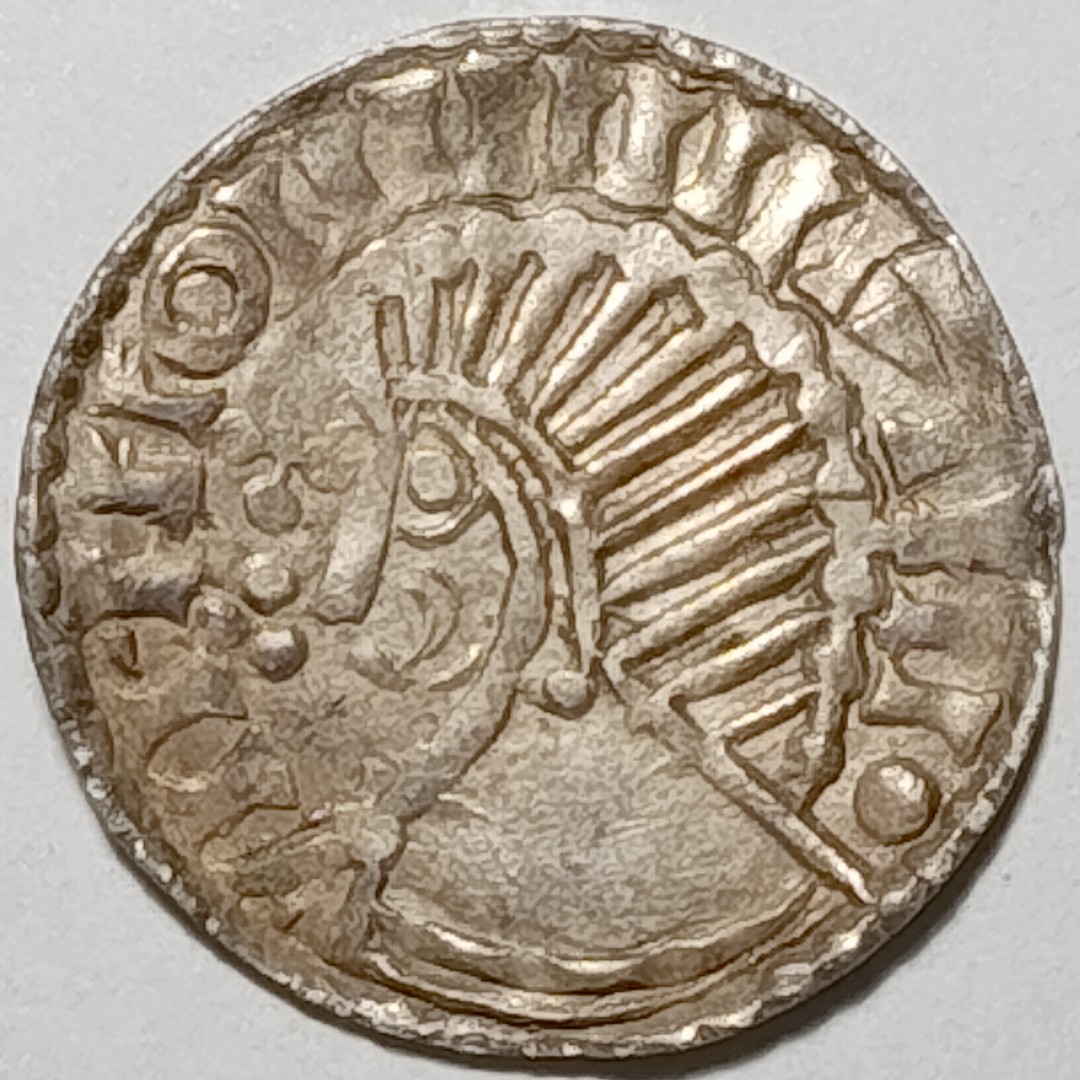
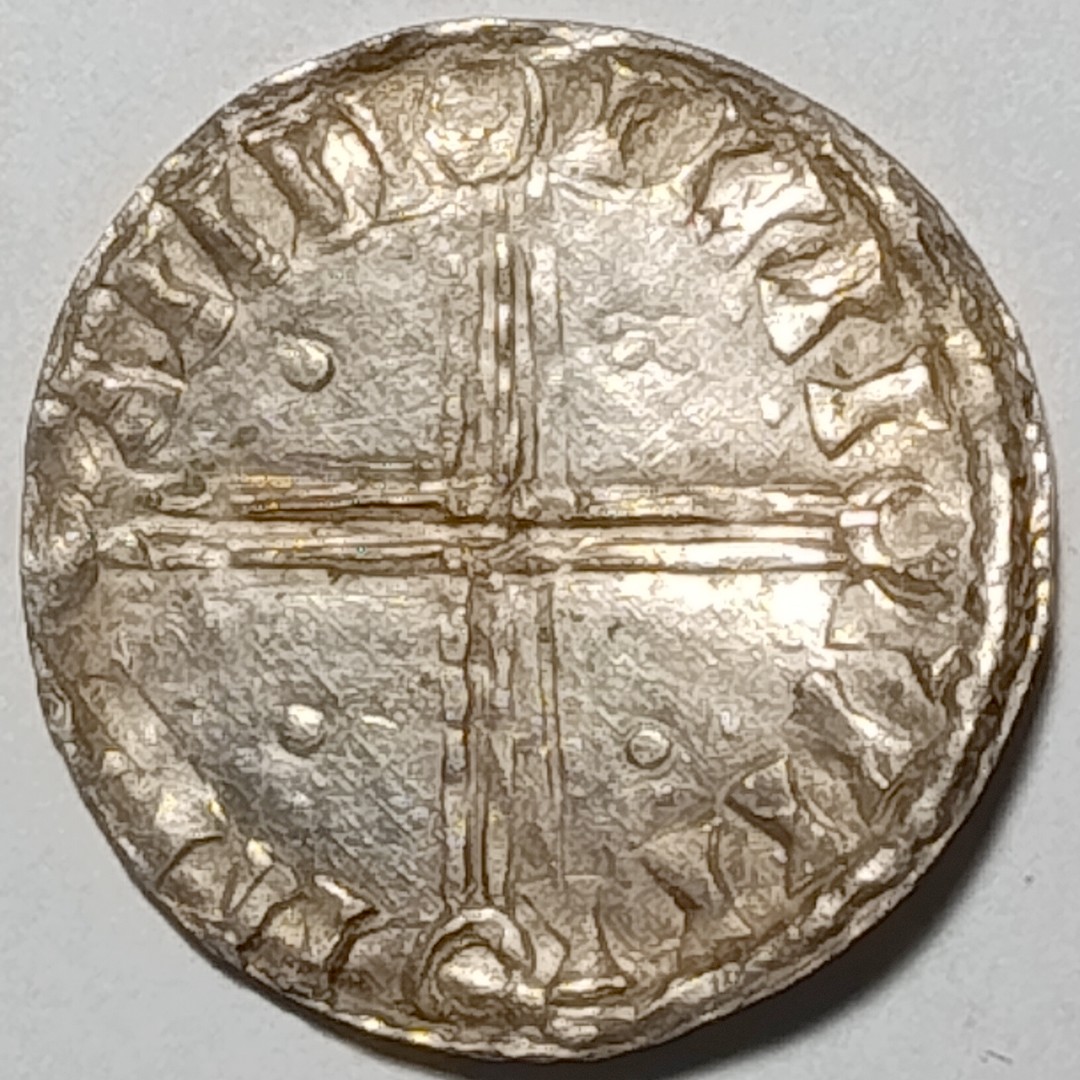
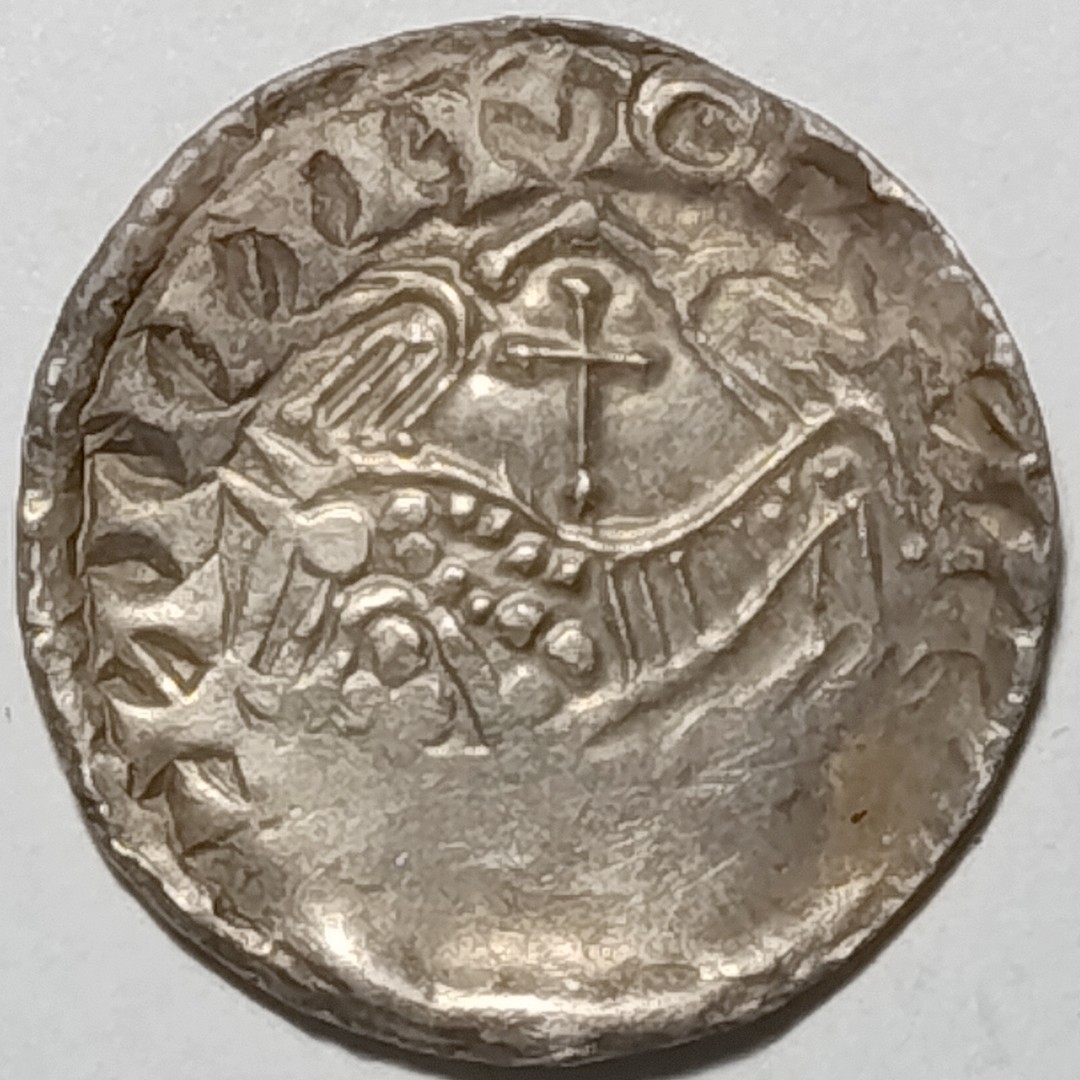
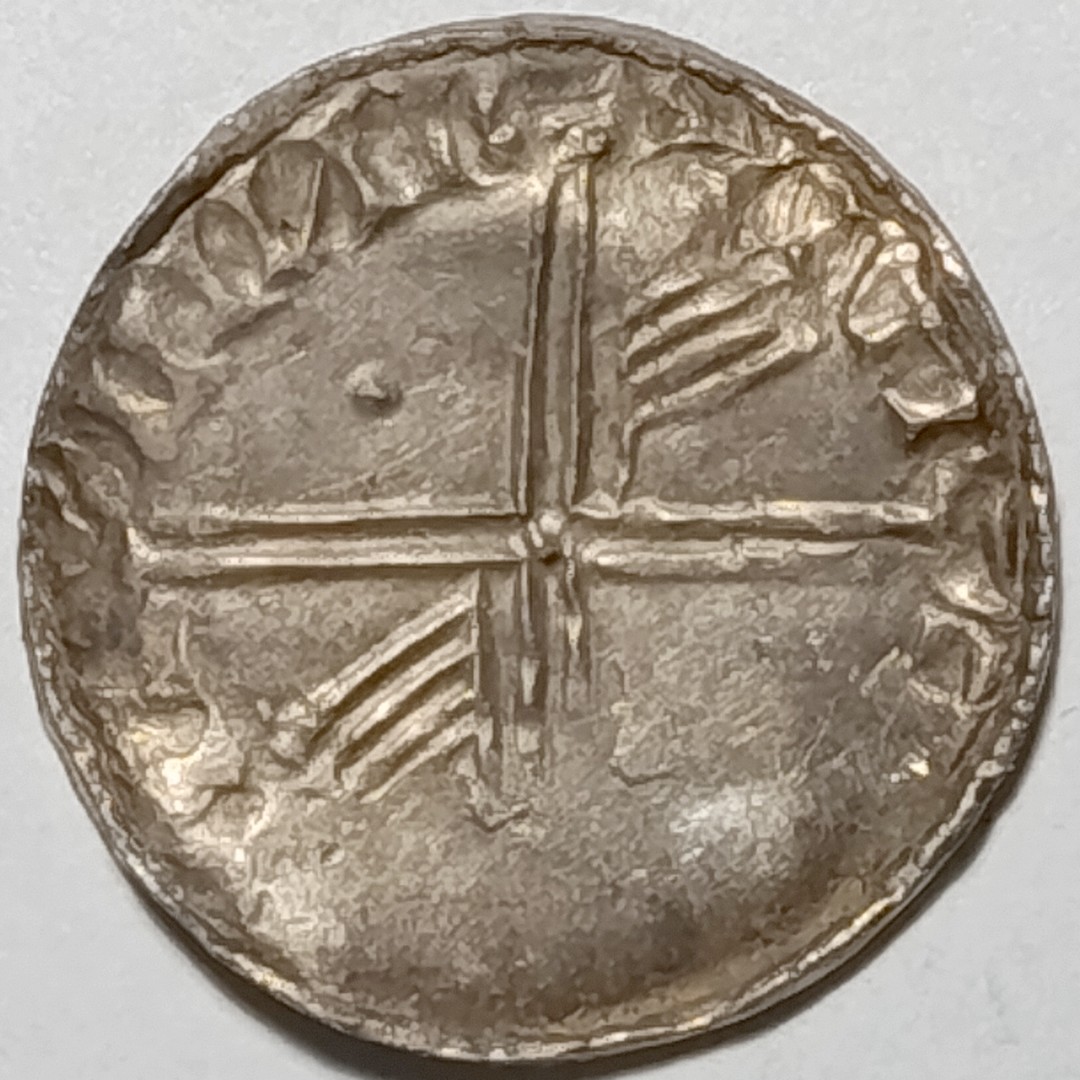
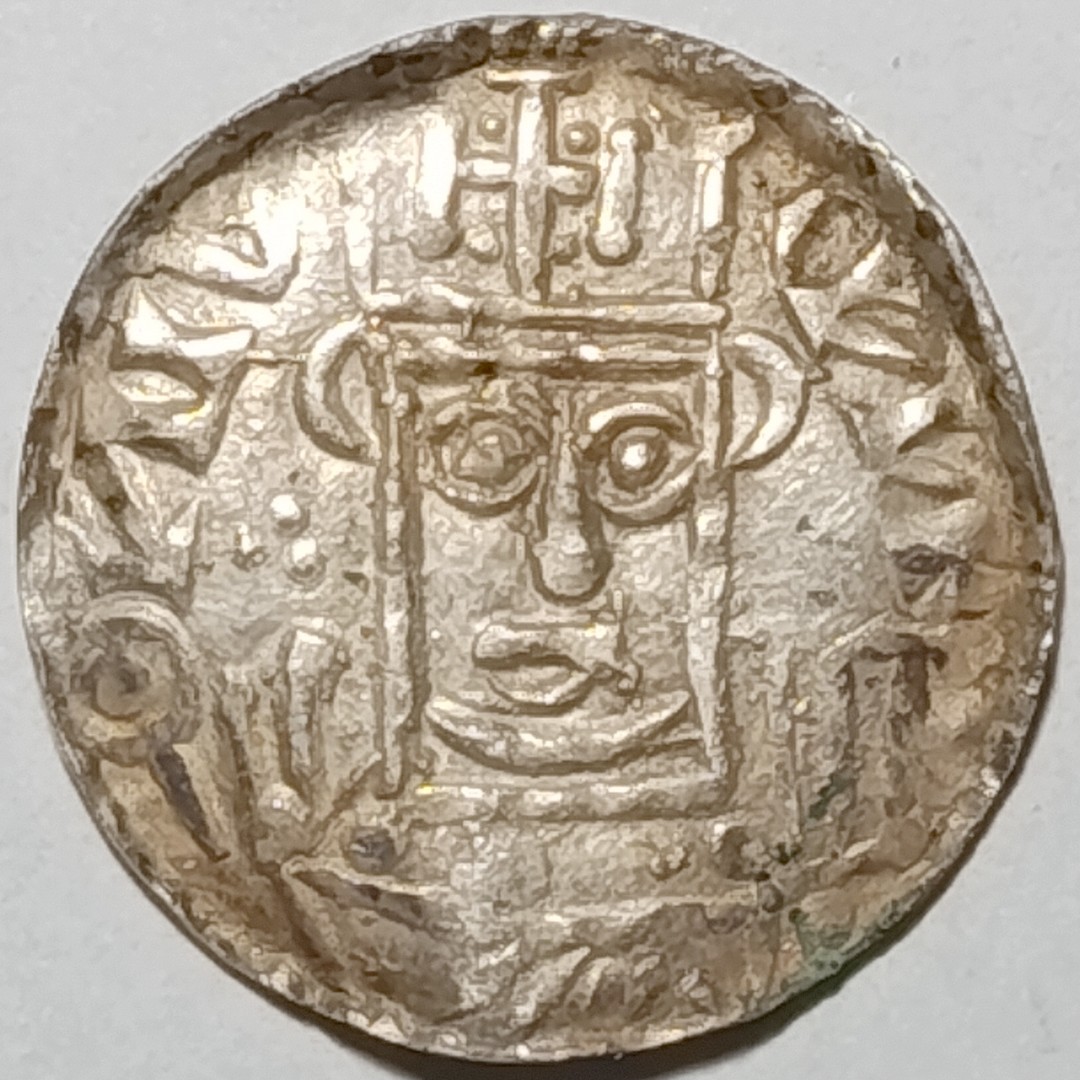
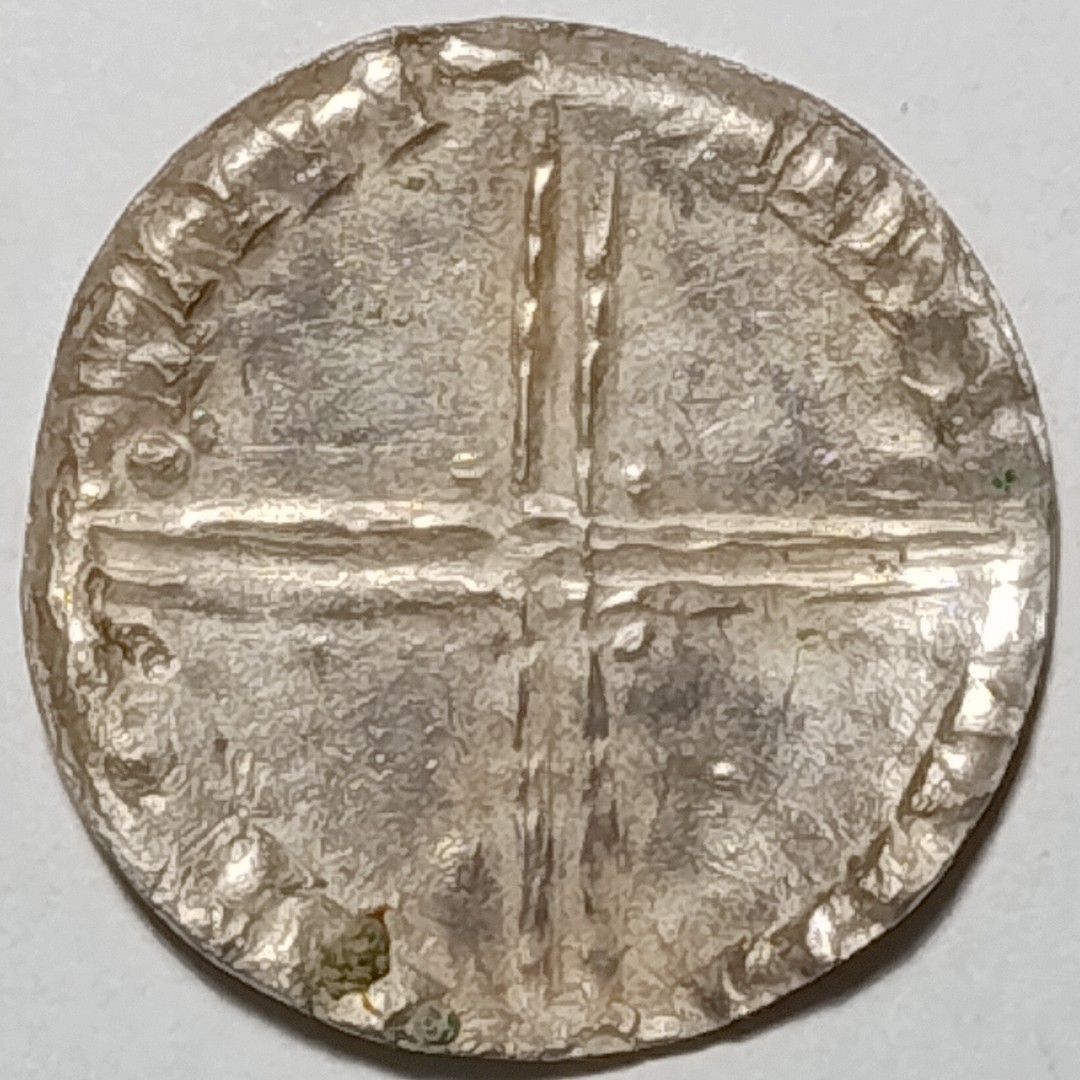
1035-1060: Hiberno-Norse Kingdom of Dublin 1 Penny. Weight: 0.99g. Diameter: 16.6mm.
(read more)
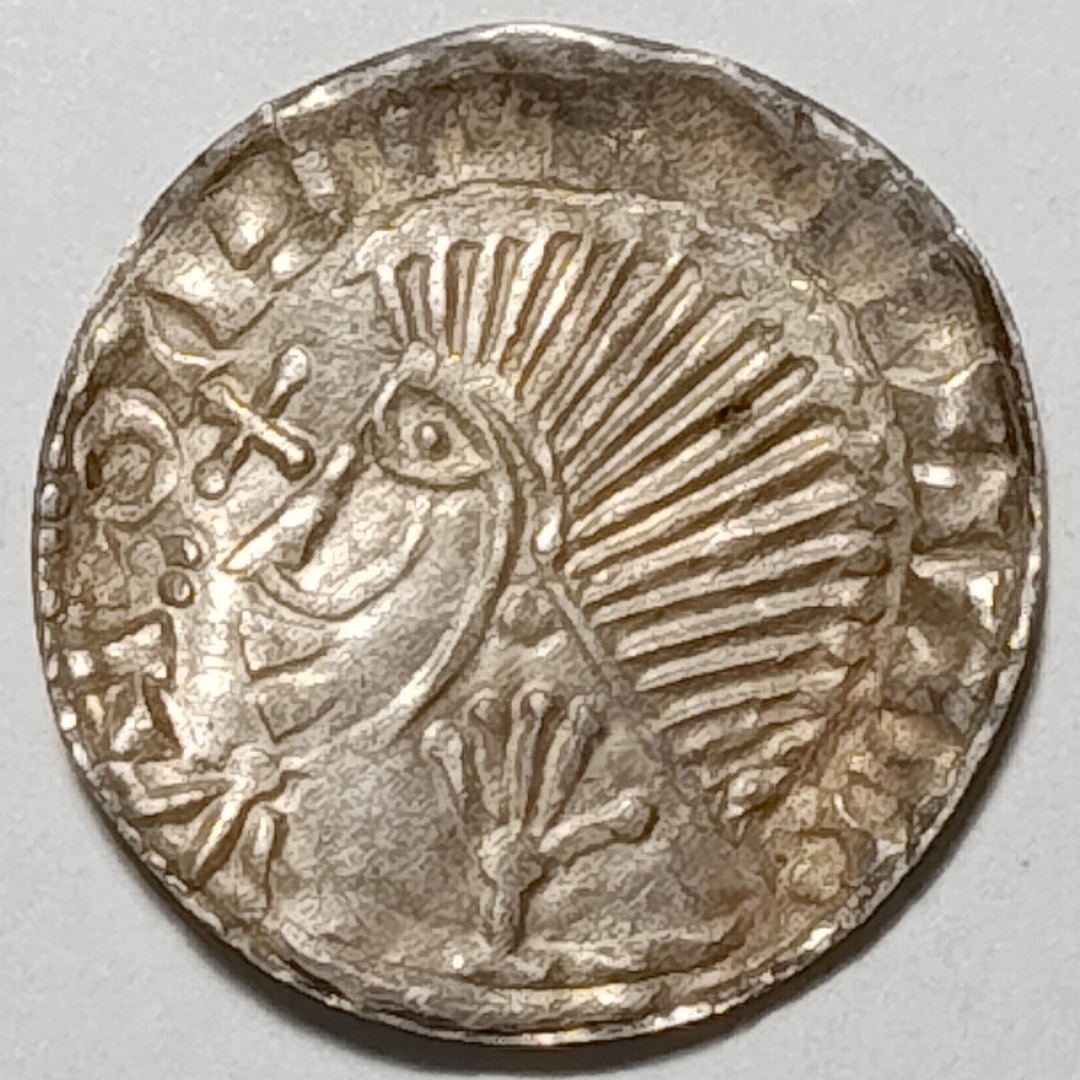
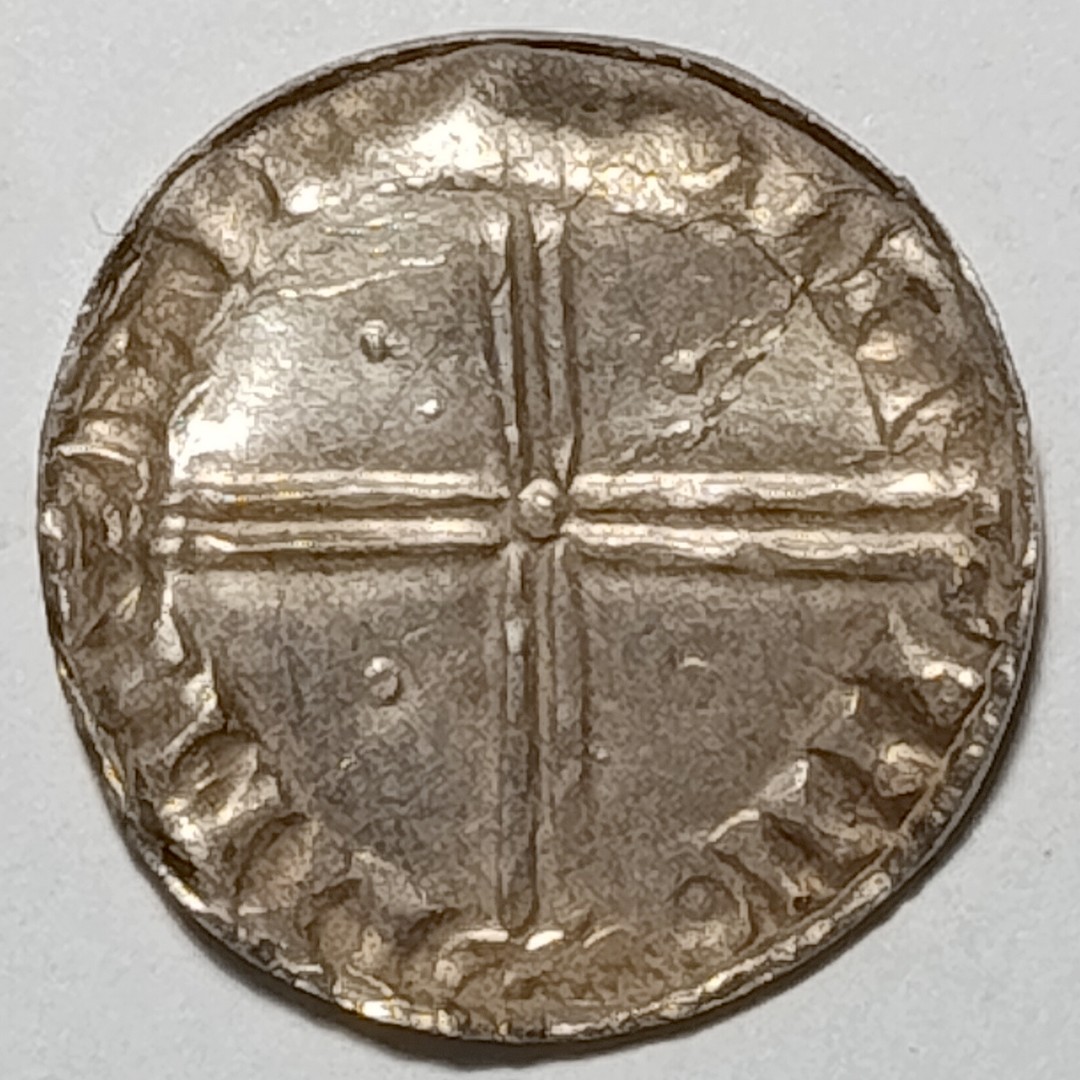
xx: Weight: 0.73g. Diameter: 17.3mm.
xx: Weight: 0.68g. Diameter: 16.8mm.
xx: Weight: 0.96g. Diameter: 17.2mm.
xx: Weight: 0.70g. Diameter: 17.4mm.
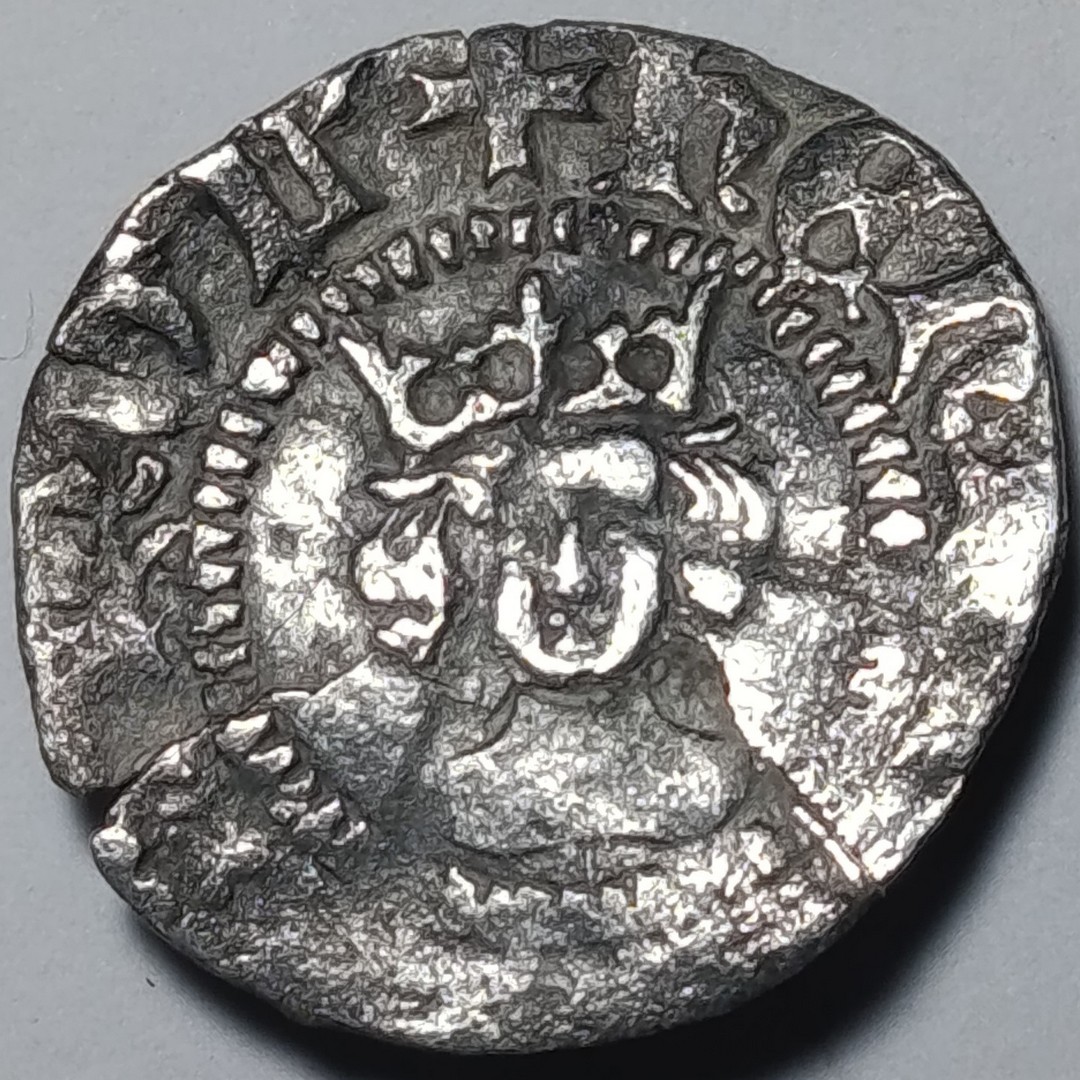
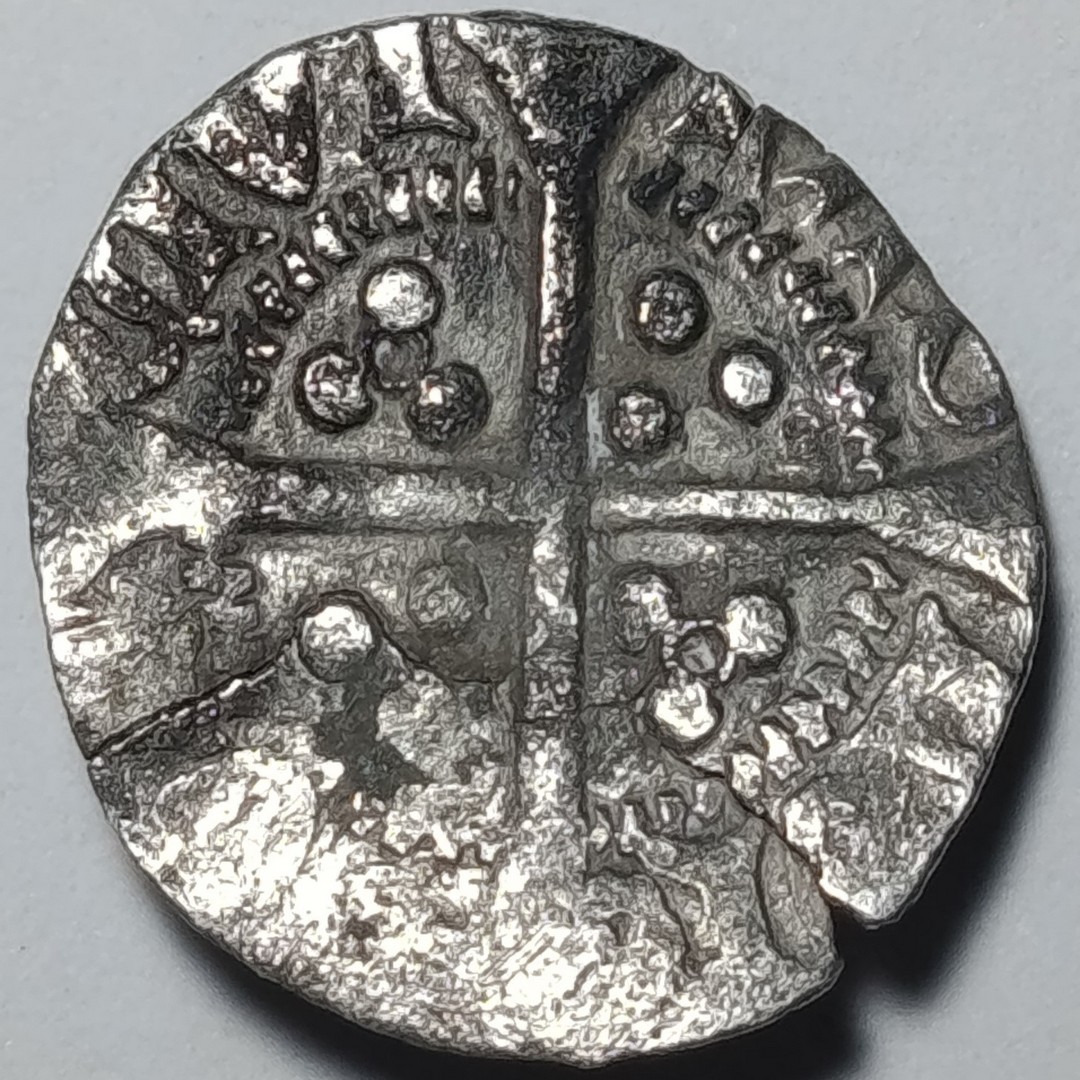
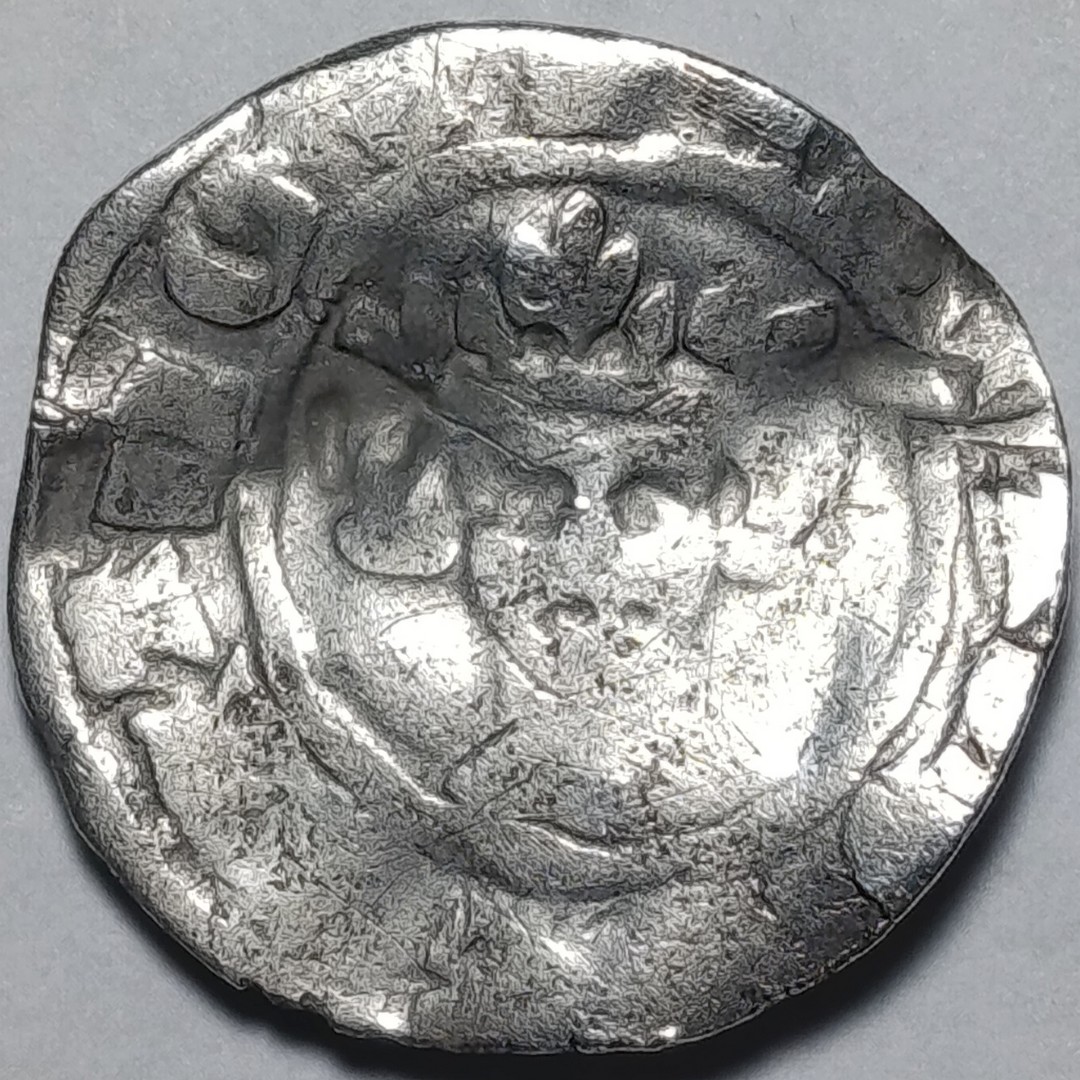
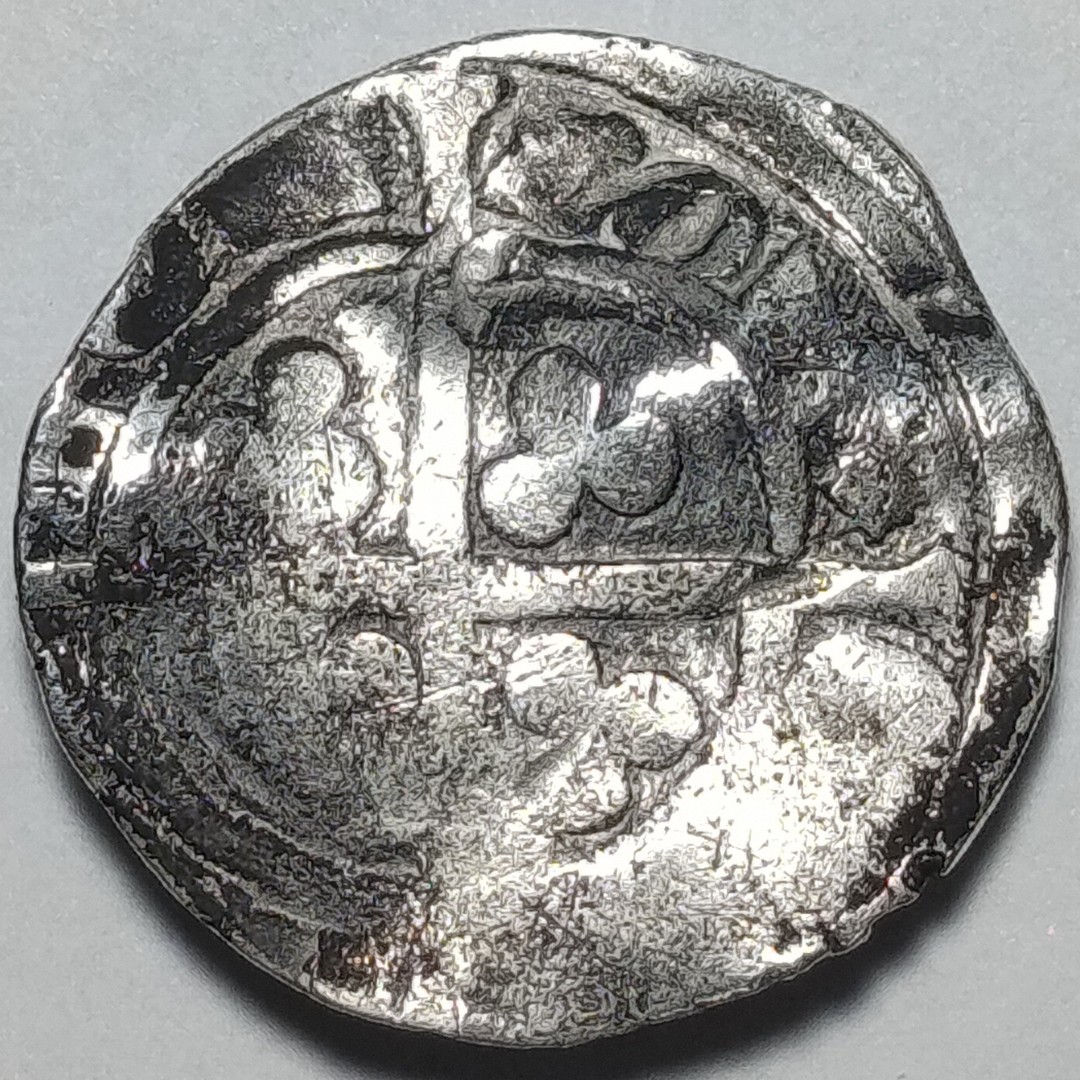
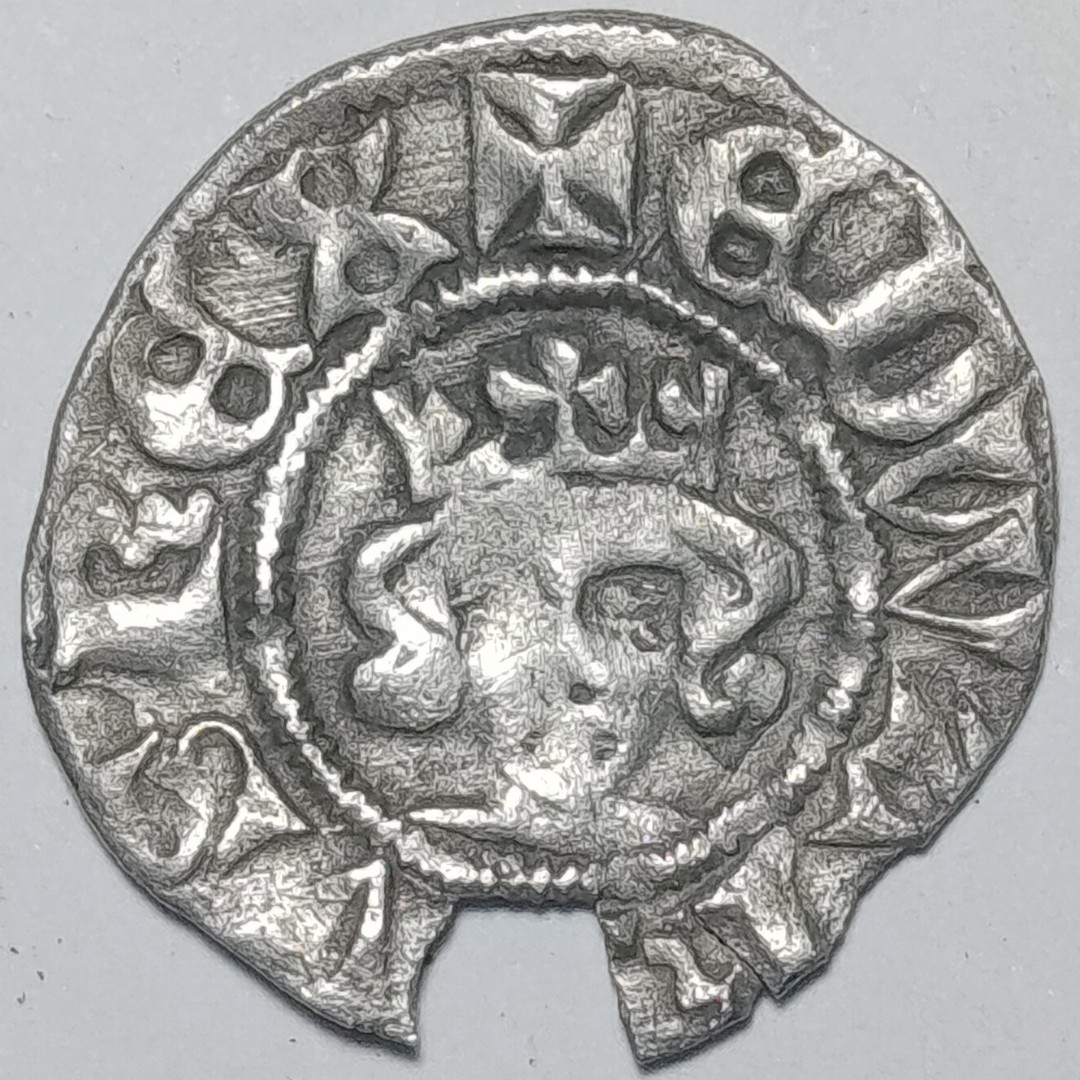
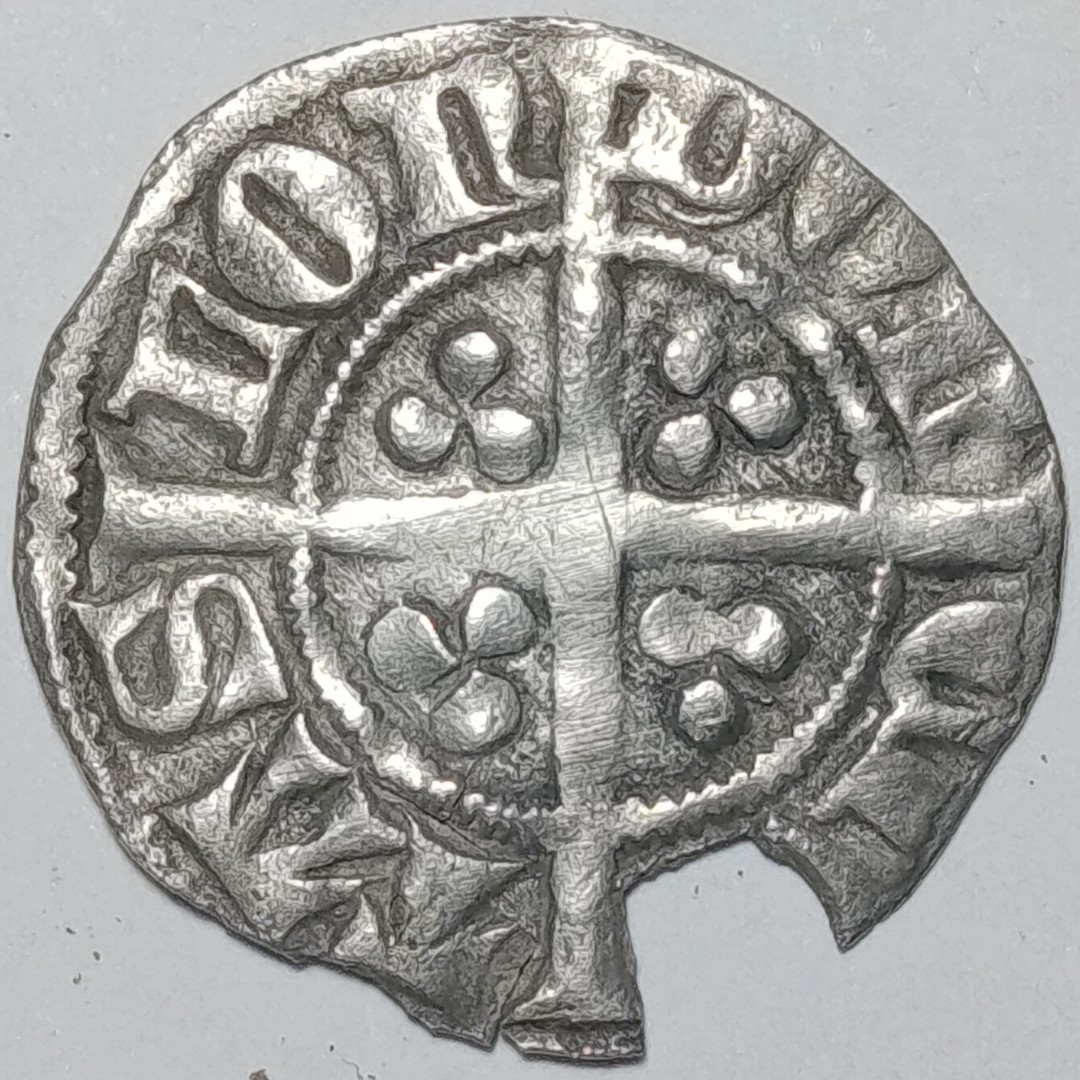
1272-1307: Newcastle on Tyne, England 1 Penny - Edward I. Weight: 1.05g. Diameter: 16.3mm.
(read more)
1279-1302: Ireland 1 Penny - Edward I. Weight: 1.4g. Diameter: 19.2mm.
(read more)
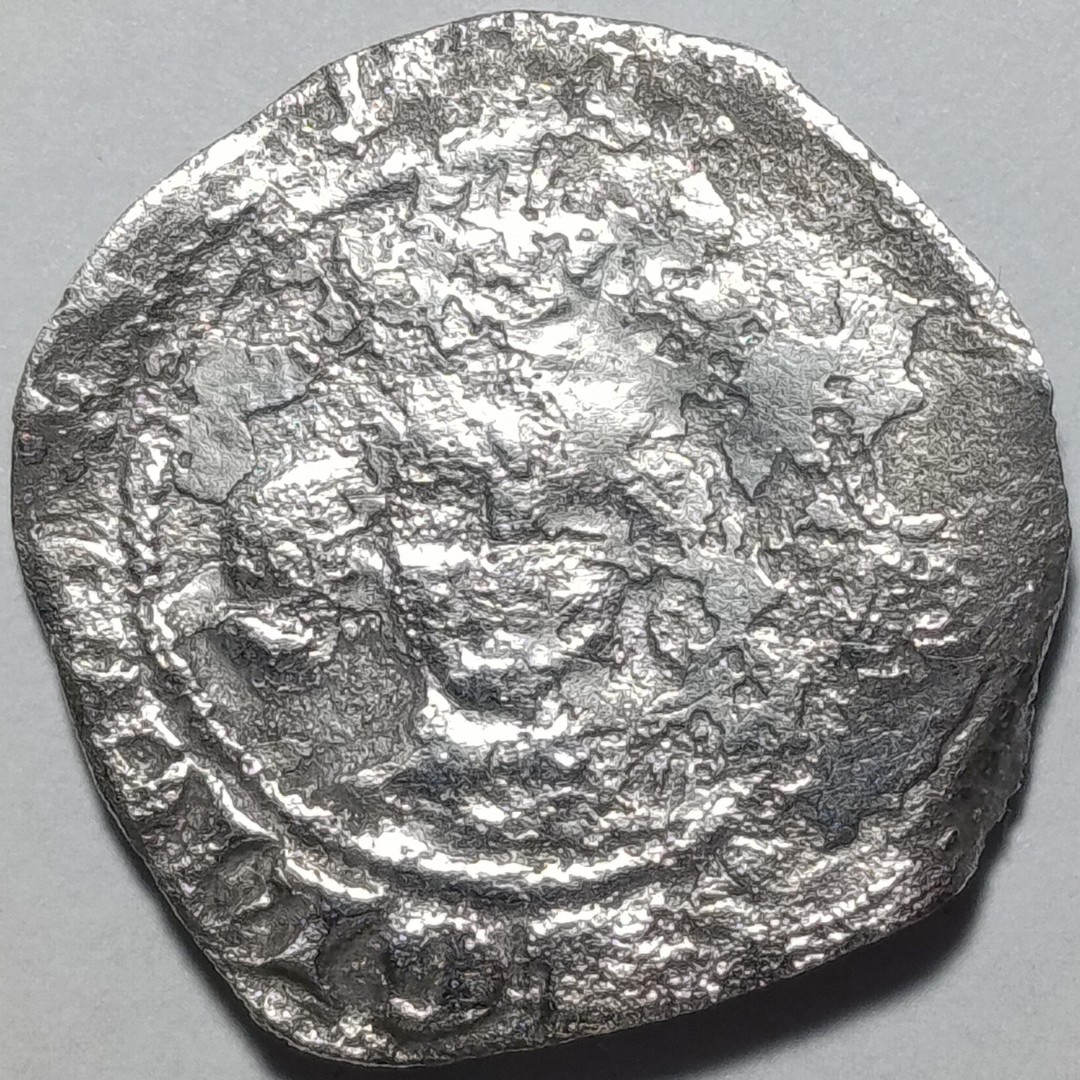
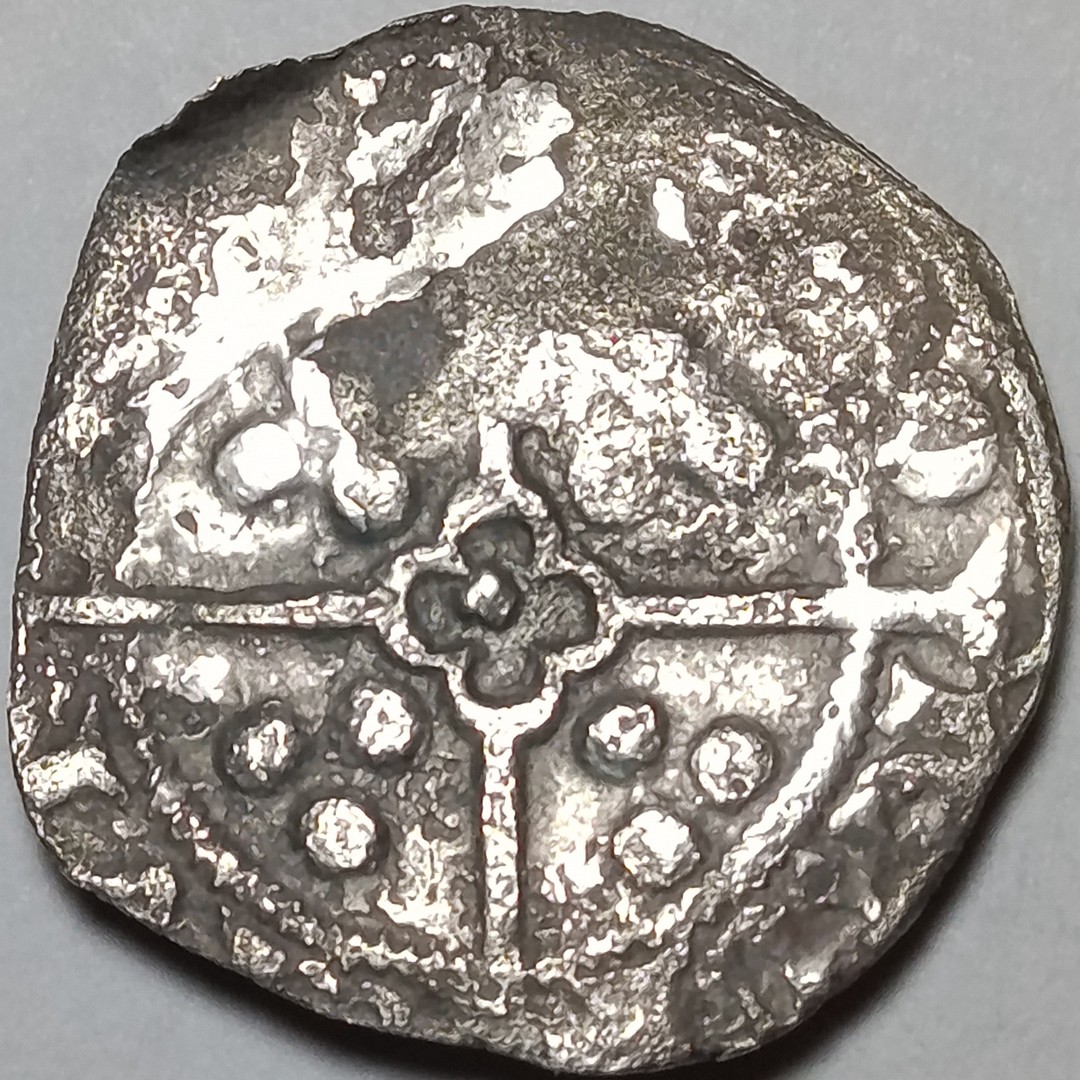
1351-1361: England 1 Groat - Edward III. Weight: 4.40g. Diameter: 26.2mm.
(read more)
1356: England 1 Groat - Edward III. Weight: 3.14g. Diameter: 24.7mm.
(read more)
1399-1412: England ½ Groat - Henry IV. Weight: 1.82g. Diameter: 22.2mm.
(read more)
1526-1544: England ½ Penny - Henry VIII. Weight: 0.25g. Diameter: 11.6mm.
(read more)
xxxx: Weight: 0.35g. Diameter: 13mm. Diameter: mm.
xxxx: Weight: 0.58g. Diameter: 14.4mm.
xxxx: Weight: 0.73g. Diameter: 17mm.
xxxx: Weight: 0.56g. Diameter: 14mm.
1560-1561: England 1 Shilling - Elizabeth I. Weight: 5.47g. Diameter: 29.7mm.
(read more)
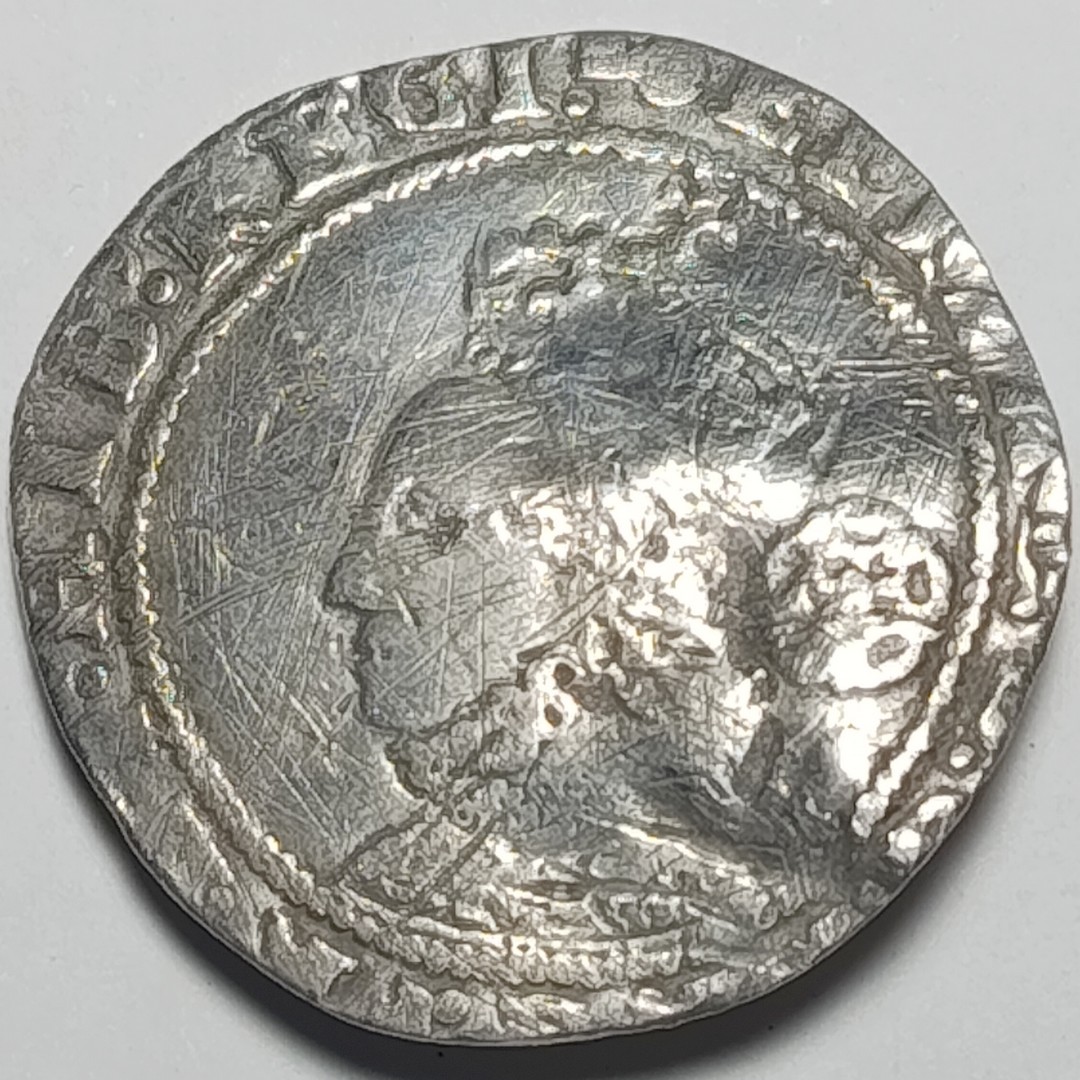
1561: England 6 Pence - Elizabeth I. Weight: 2.87g. Diameter: 24.9mm.
(read more)
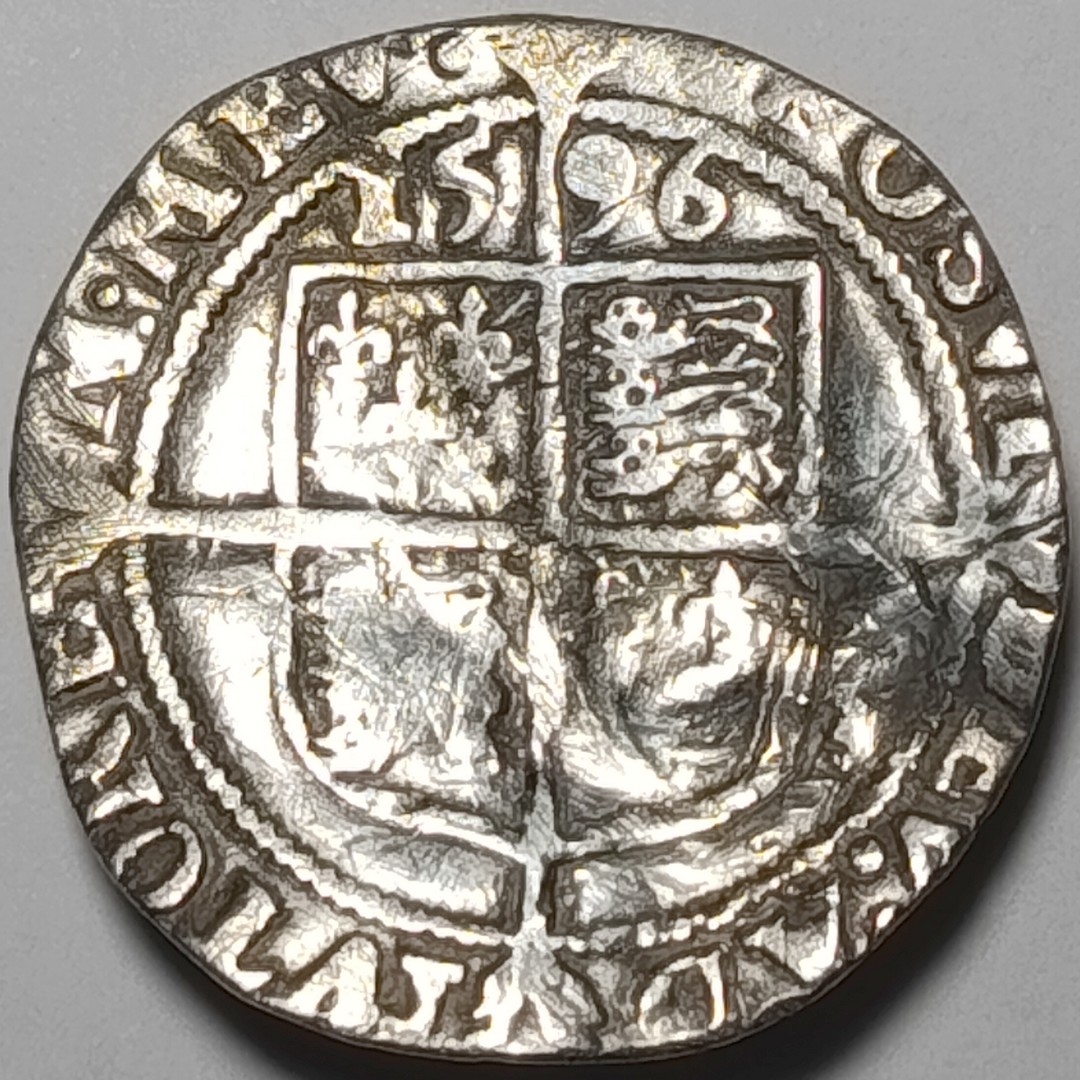
1596: England 6 Pence - Elizabeth I. Weight: 2.28g. Diameter: 23.5mm.
(read more)
1601: Ireland 6 Pence - Elizabeth I. Weight: 3g. Diameter: 23.7mm.
(read more)
1757: United Kingdom 6 Pence - George II. Weight: 3g. Silver: 0.925.
(read more)
1805: Ireland 10 Pence - Bank of Ireland - Token, George III. Weight: 4.05g.
(read more)
1813: Ireland 10 Pence - Bank of Ireland - Token, George III. Weight: 3.3g.
(read more)
1819: United Kingdom 1 Shilling - George III. Weight: 5.65g. Silver: 0.925.
(read more)
1823: United Kingdom 1 Shilling - George IV. Weight: 5.65g. Silver: 0.925.
(read more)
1826: United Kingdom 1 Shilling - George IV. Weight: 5.66g. Silver: 0.925.
(read more)
1843: United Kingdom 4 Pence - Victoria. Weight: 1.89g. Silver: 0.925.
(read more)
1866: United Kingdom 6 Pence - Victoria. Weight: 2.83g. Silver: 0.925.
(read more)
1879: United Kingdom 3 Pence - Victoria. Weight: 1.41g. Silver: 0.925.
(read more)
1880: United Kingdom 1 Shilling - Victoria. Weight: 5.66g. Silver: 0.925.
(read more)
1894: United Kingdom 3 Pence - Victoria. Weight: 1.41g. Silver: 0.925.
(read more)
1898: United Kingdom 1 Shilling - Victoria. Weight: 5.66g. Silver: 0.925.
(read more)
1920: United Kingdom 3 Pence - George V. Weight: 1.41g. Silver: 0.500.
(read more)
1920: United Kingdom 2 Shillings (florin) - George V. Weight: 11.3g. Silver: 0.500.
(read more)
1926: United Kingdom 6 Pence - George V. Weight: 2.83g. Silver: 0.500.
(read more)
1928: Ireland 1 Shilling - Bull. Weight: 5.66g. Silver: 0.750.
(read more)
1928: Ireland 2 Shillings (florin) - Salmon. Weight: 11.31g. Silver: 0.750.
(read more)
1928: Ireland ½ Crown - Horse. Weight: 14.14g. Silver: 0.750.
(read more)
1928: United Kingdom ½ Crown - George V. Weight: 14.14g. Silver: 0.500.
(read more)
1929: United Kingdom 6 Pence - George V. Weight: 2.83g. Silver: 0.500.
(read more)
1935: United Kingdom 2 Shillings (florin) - George V. Weight: 11.31g. Silver: 0.500.
(read more)
1939: United Kingdom 2 Shillings (florin) - George VI. Weight: 11.31g. Silver: 0.500.
(read more)
1944: United Kingdom 6 Pence - George VI. Weight: 2.83g. Silver: 0.500.
(read more)
1945: United Kingdom 1 Shilling - George VI. Weight: 5.66g. Silver: 0.500.
(read more)
Copper coins
985-1014: Indian Hindu Dynasties - Massa - Raja Raja Chola I. Weight: 3.80g. Copper.
(read more)
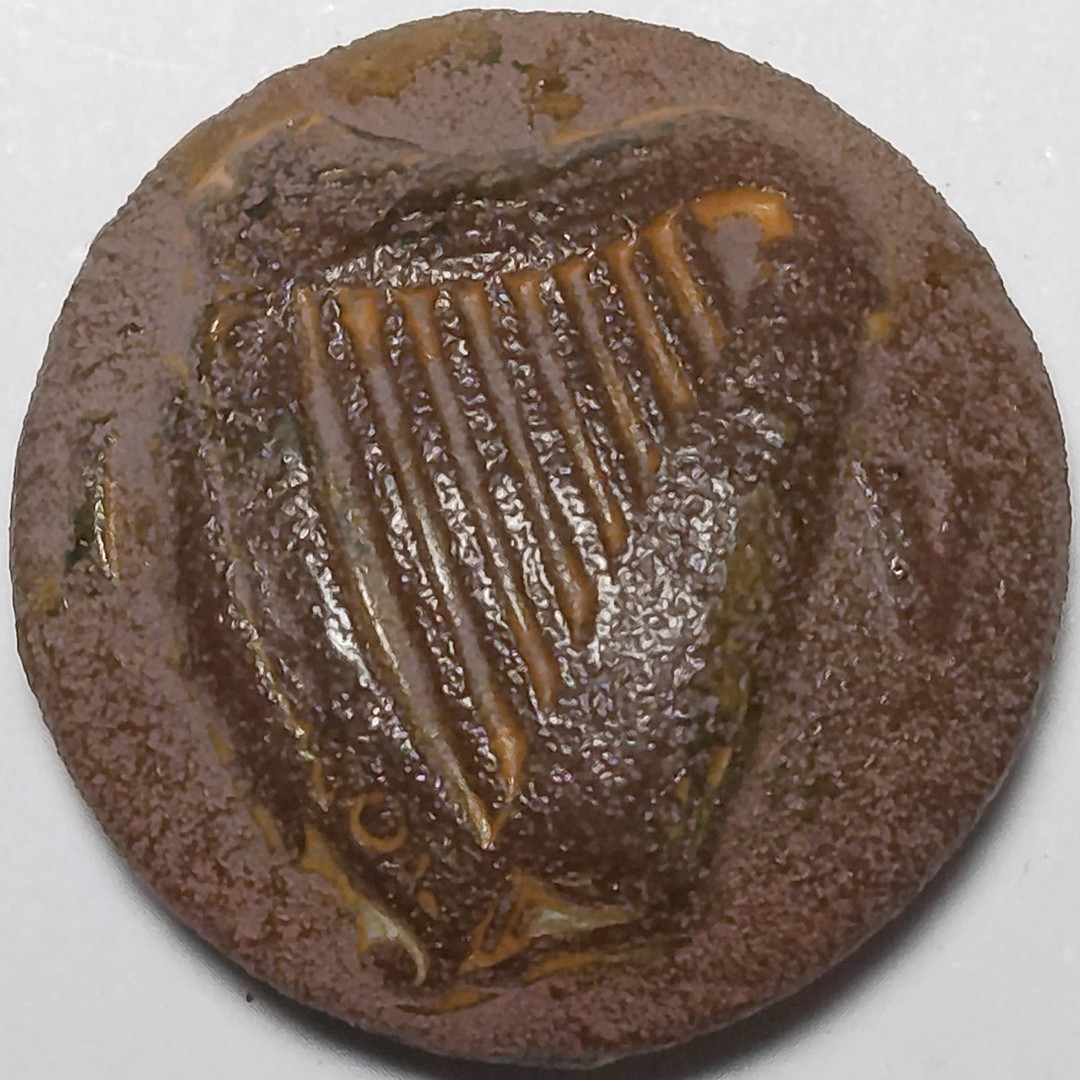
1602: Ireland 1 Penny - Elizabeth I. Weight: 1.31g. Copper.
(read more)
1602: Ireland 1 Penny - Elizabeth I. Weight: 1.70g. Copper.
(read more)
1672: Ireland ½ Penny - Mic Wilson. 17th century Token. Weight: 2.98g. Brass.
(read more)
1689: Ireland 1 Shilling - James II. Weight: 5.91g. Brass.
(read more)
1683: Ireland ½ Penny - Charles II. Weight: 6.50g. Copper.
(read more)
1686: Ireland ½ Penny - James II. Weight: 7.45g. Copper.
(read more)
1689: Ireland 1 Shilling - James II. Weight: 3.92g. Brass.
(read more)
1692: Ireland ½ Penny - William III / Mary II. Weight: 6.7g. Copper.
(read more)
1696: Ireland ½ Penny - William III. Weight: 6.2g. Copper.
(read more)
1733: Isle of Man 1 Penny - James Stanley. Weight: 9.48g. Copper.
(read more)
1741: Province of Holland Duit. Weight: 3.84g. Copper.
(read more)
1760: Ireland ½ Penny - George II. Weight: 8.40g. Copper.
(read more)
1775: Ireland ½ Penny - George III. Weight: 9.30g. Copper.
(read more)
1792: Ireland ½ Penny - Camac Kyan and Camac. Weight: 5.25g. Copper.
(read more)
1794: Ireland ½ Penny - J E & Co. (D&H Cork 1). Copper.
(read more)
1805: Ireland ½ Penny - George III. Weight: 7.64g. Copper.
(read more)
1818: Barcelona 4 Quartos - Joseph Bonaparte. Weight: 9.2g. Copper.
(read more)
1822: Ireland 1 Penny - George IV. Weight: 16.5g. Copper.
(read more)
1825: United Kingdom 1 Penny - George IV. Weight: 18g. Copper.
(read more)
1854: United Kingdom 1 Penny - Victoria. Weight: 18.8g. Copper.
(read more)
1863: United Kingdom 1 Penny - Victoria. Weight: 9.45g. Bronze.
(read more)
1876: United Kingdom ½ Penny - Victoria. Weight: 5.6g. Bronze.
(read more)
1899: United Kingdom 1 Penny - Victoria. Weight: 9.45g. Bronze.
(read more)
1917: United Kingdom ½ Penny - George V. Weight: 5.7g. Bronze.
(read more)
1917: Denmark 2 öre - Christian X. Weight: 4g. Bronze.
(read more)
1934: Ireland 3 Pence - Hare. Weight: 3.24g. Nickel.
(read more)
1935: Ireland 6 Pence - Irish Wolfhound. Weight: 4.54g. Nickel.
(read more)
1935: Ireland 1 Penny - Hen. Weight: 9.45g. Bronze.
(read more)
1938: United Kingdom ½ Penny - George VI. Weight: 5.66g. Bronze.
(read more)
1940: Ireland 1 Farthing - Woodcock. Weight: 2.83g. Bronze.
(read more)
1953: Ireland ½ Penny - Pig. Weight: 5.67g. Bronze.
(read more)
1943: United Kingdom 3 Pence - George VI. Weight: 6.86g. Nickel-Brass.
(read more)
1948: United Kingdom 1 Shilling - George VI. Weight: 5.66g. Copper-Nickel.
(read more)
1954: Ireland 2 Shillings (Florin) - Salmon. Weight: 11.31g. Copper-Nickel.
(read more)
1955: United Kingdom 1 Shillings - Elizabeth II. Weight: 5.66g. Copper-Nickel.
(read more)
1957: United Kingdom 2 Shillings (Florin) - Elizabeth II. Weight: 11.31g. Copper-Nickel.
(read more)
1959: Ireland ½ Crown - Horse. Weight: 14.16g. Copper-Nickel.
(read more)
1965: United Kingdom 5 Shillings - Elizabeth II. Winston Churchill Memorial. Weight: 28.28g. Copper-Nickel.
(read more)
1968: USA 1 Cent - Lincoln. Weight: 3.11g. Copper-Zinc.
(read more)
Tokens
1650-1670: Ireland 1 Penny - Edmund Spring, flying horse "marchant in dvblin, edmvnd spring". Weight: 1.46g. Copper.
(read more)
1834: Ireland 1 Farthing - William IV Weight: 4.5g. Bronze.
(read more)
1794: Ireland ½ Penny - Dublin L and R. Emergency coinage. Copper.
(read more)
1797: United Kingdom Spade Guinea Gaming Token - George III. Copper.
(read more)
1787 - 1797: United Kingdom 1 Farthing - Victoria. Copper.
(read more)
1874: New Zealand 1 Penny - Samuel Coombes, Auckland. Copper.
(read more)
1850–1880: Obverse: HENRY & JAMES, CITY CLOTHIERS, DUBLIN. Reverse: HENRY & JAMES, 82 DAME ST. WIKTOR OVERCOATS, PARLIAMENT ST.
1787-1797: United Kingdom ½ Penny - George III. Weight: 9.65g. Copper.
(read more)
Coin Weight for 4dwt and 15grs from the 1714 standard.
(read more)
Coin Weight. 1 pennyweight (Dwt) = 1.555 grams. 1 grain (Gr) = 0.0648 grams.
(read more)
1820-1870: Token - Farthing Dublin, Scott, Bell & Co. Obverse: SCOTT BELL & Co SUCCESSORS TO HARVIES & Co WELLINGTON QUAY DUBLIN.
Reverse: SILK MERCERS. DRAPERS & HOSIERS.
(read more)
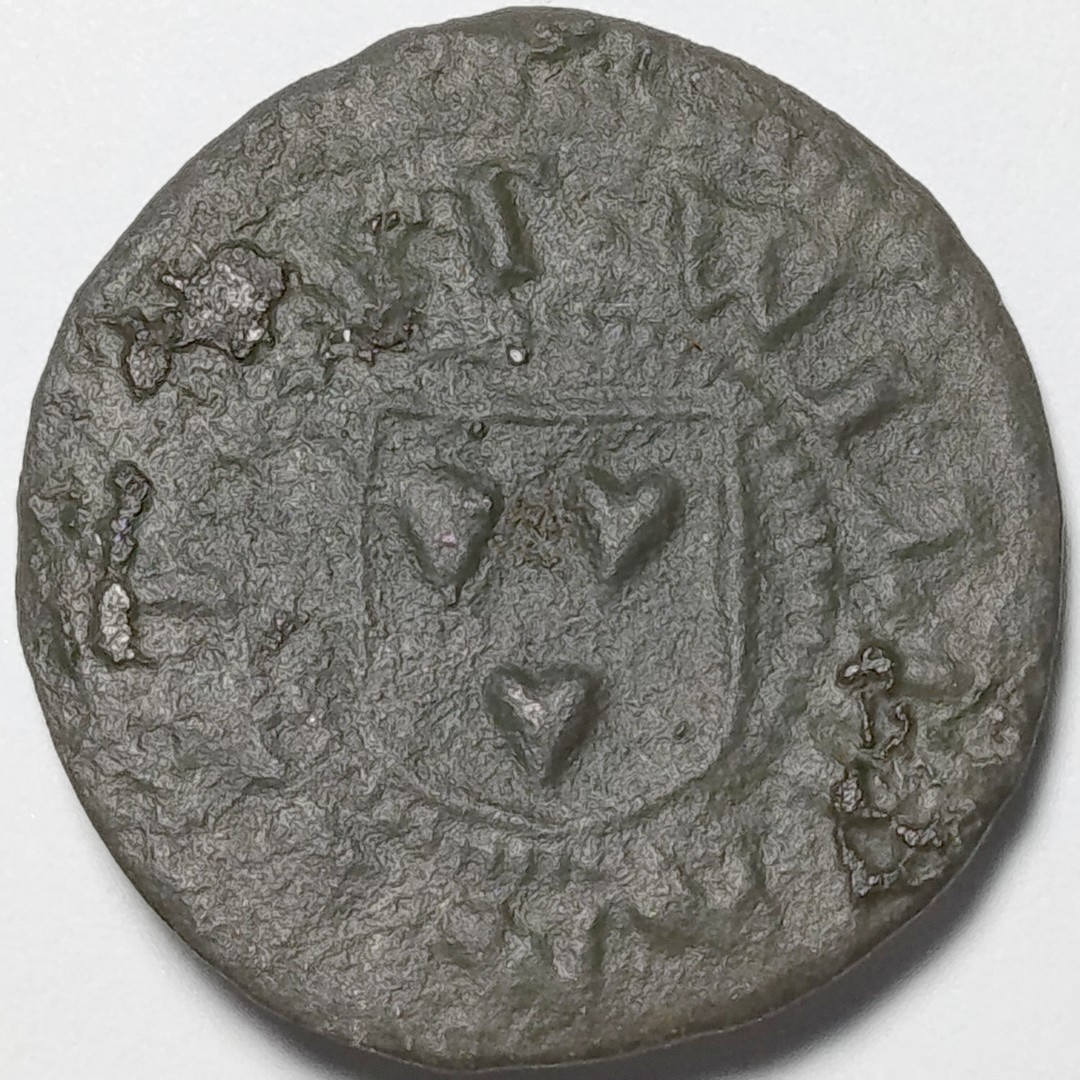
Dublin Penny token 17th Century. It appears to be similar to the Lewis Des Mynieres penny, sharing the same style of arms on the obverse.
(read more)
1851-1887: United Kingdom 1 Florin - Victoria (Fake). Weight: 6.39g. Zinc alloy.
(read more)
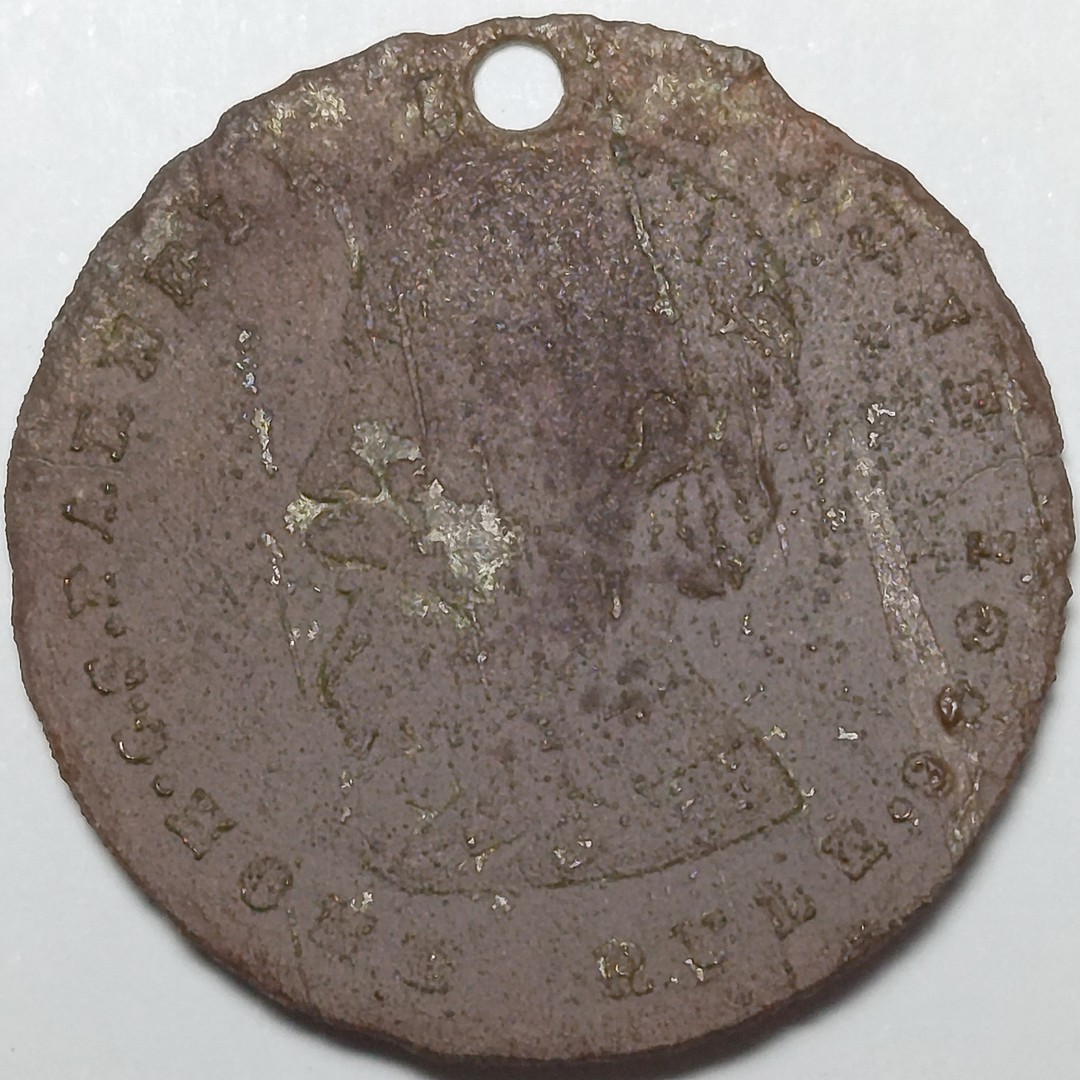
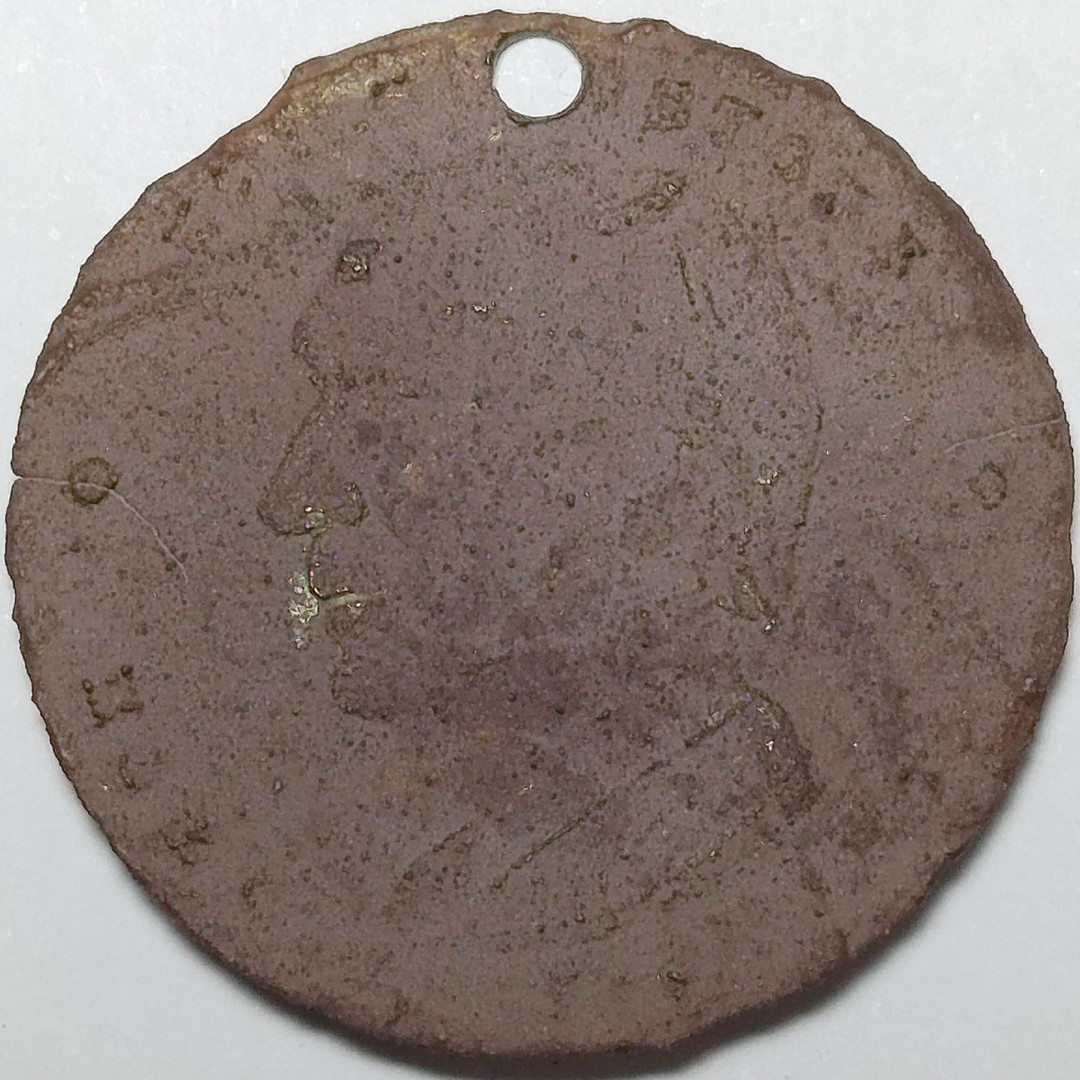
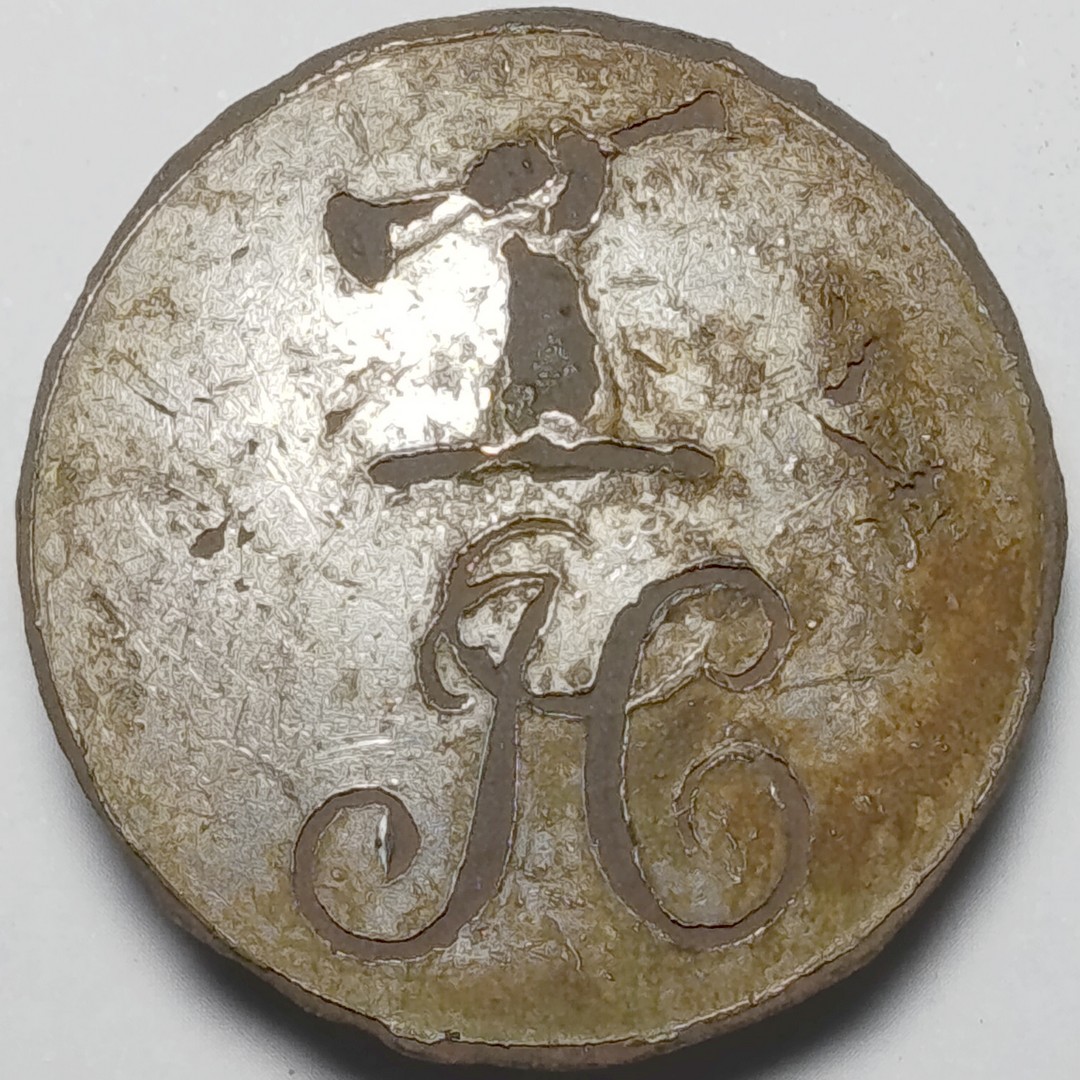
Love tokens in Ireland appeared most commonly in the 1700s and 1800s, when couples exchanged meaningful handmade gifts during courtship. Coins were often smoothed and engraved with initials or messages, then carried as a reminder of the giver. They symbolised love, commitment, and memory, especially when partners were separated by travel, migration, or military service.
1940-1949: Irish Hospital Sweeps - Lucky Token. Weight: 3.29g. Aluminium.
(read more)
Coin Weight. Composition: Brass.
(read more)
1840: Medal - Victoria, Anti-Corn Law League. Pewter.
(read more)
First Communion Medal.
Beer Token - Hamburg. Weight: 7.2g. Brass. Lettering: Holsten Pils The odd Lager. The Holsten-Brauerei AG is a brewery company founded in 1879 in the then Holstein town of Altona (Elbe). It has belonged to Carlsberg A/S since 2004 and has its administrative headquarters in Hamburg's Altona-Nord district on Holstenstraße and its brewery in Hamburg-Hausbruch.
(read more)
A 19th Century Brass Home Rule Token, of Parnell and Gladstone. The Home Rule movement was a 19th‑century Irish effort to gain political autonomy. That is, its own parliament and self‑government while remaining within the United Kingdom of Great Britain and Ireland. It did not seek full independence, but aimed for Ireland to control its internal affairs: taxation, education, agriculture, and local law. Under Charles Stewart Parnell’s leadership, the Home Rule movement nearly succeeded when William Ewart Gladstone introduced the First Home Rule Bill in 1886, though it failed after a Liberal Party split. Gladstone’s Second Bill in 1893 passed the Commons but was rejected by the Lords. The Third Bill of 1912 triggered the Home Rule Crisis; although enacted after the outbreak of World War I, its implementation was postponed and never realised in its original form.
(read more)
(Pic)
Medallions
On the right: Bronze medal, 18th century. Inscription: "Here is the Heart That Loved Men So Much Jesus".
(Pic)
On the left: Arch-Confraternity of The Holy Family Medal. Issued By O' Connor , Limerick. Circ: 1920-50s.
Obverse: Jesus , Mary , Joseph. Reverse: Inscription - Archconfraternity of The Holy Family - Established By By Pius IX - April 1847. Oval Shaped. Brass.
On the right: Large Bronze The Brotherhood of the Holy Family Medal. The Brotherhood of the Holy Family was founded in 1844 by captain Henri Belletable and was part of the Catholic Church. Belletable wanted people to strive for a live without sin by dedicating themselves to Jesus Christ, Mary and Joseph. The city of Helmond was the first parish in the Netherlands with members of the Brotherhood in 1851. Later a secretary was founded in Den Bosch, but in the 1960s the Brotherhood rapidly lost its members because it no longer fitted into the spirit of the age.
(read more)
On the left: St. Anthony & St. Francis Medal - 19th century. Inscription obverse: "S. ANT. D. P. - St. Anthony De Padua - of Padua", Reverse: "S. FRA. O.P.N. - St. Francis Ora Pro Nobis - Pray for us”.
On the right: Antique bronze charm religious pendant St. Benedict exorcism medal.
On the left: Vatican reliquary theca with relics of Saint Pope Pius X patron of pilgrims. Inscription: "S. PII X. C. P. - Saint Pius X, Confessor & Pope".
Old Pin Brooch. Jubilee in the Catholic Church 1950. Inscription: "ANNO JVBILAEI MCML".
On the right: This medal commemorates the Third National Catholic Congress held in Norwich in August 1912.
On the left: Victorian Catholic Total Abstinence League Cross, circa 19th-20th century.
(Pic)
On the right: Vintage Old Sterling silver Eucharist Holy Communion Medal.
On the left: The Maltese cross pendant originates from 1912, assayed in Chester and crafted by Albert Sydenham.
The Maltese cross symbolizes steadfast courage and the knightly virtues of loyalty, honor, and self‑sacrifice. Its eight points traditionally represent the noble qualities expected of those who served to protect others. These eight points are often said to stand for loyalty, piety, generosity, bravery, glory and honor, contempt of death, helpfulness toward the poor and sick, and respect for the Church.
On the right: Antique charm religious pendant St. Benedict exorcism medal.
On the left: Vintage religious pendant with the inscription: "CHILD OF THE HOLY ANGELS".
(Pic)
On the right: Saint Ignatius of Loyola Pendant.
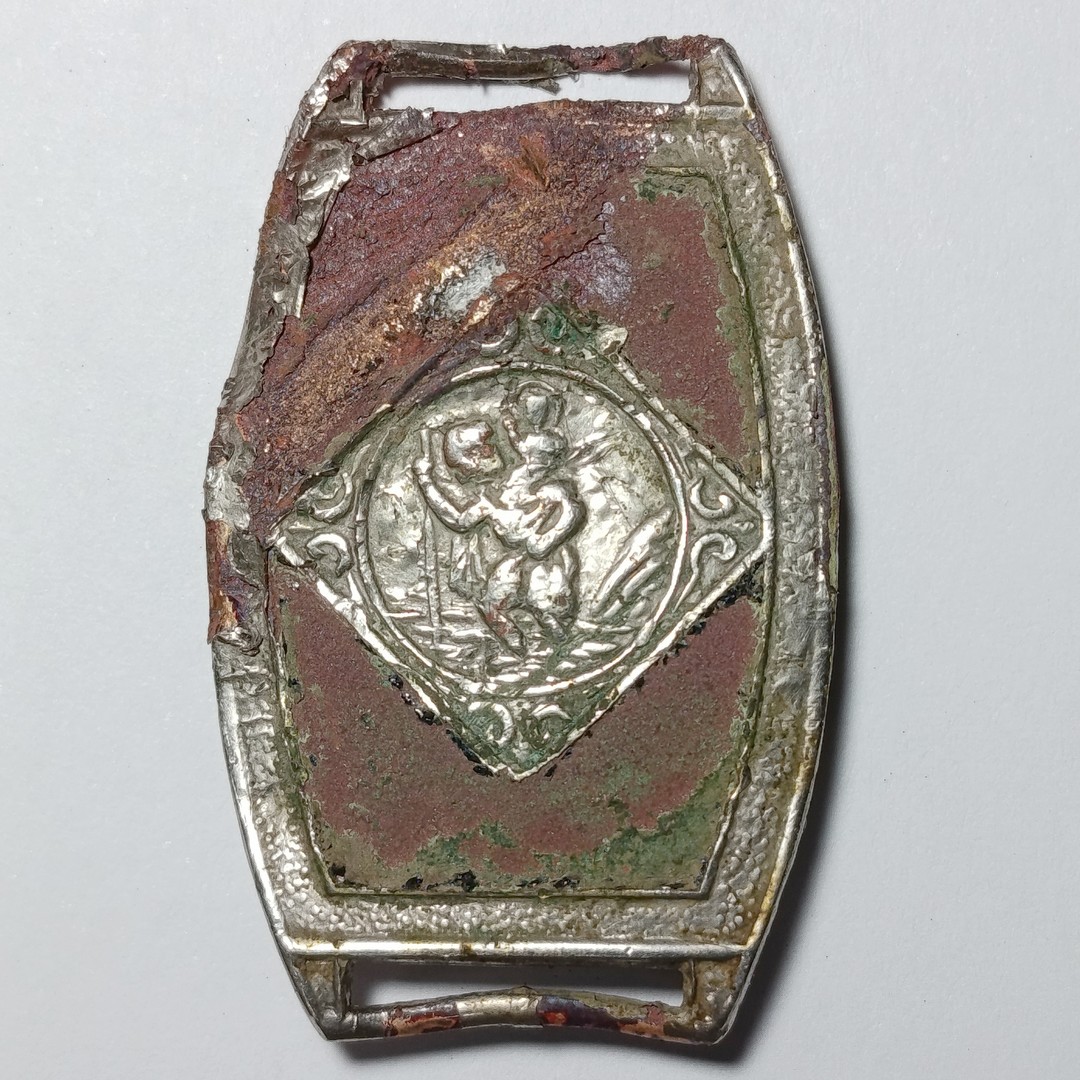
An ornamental pendant, likely a component of a belt or personal equipment, featuring a centrally placed, stamped medallion set within a diamond‑shaped frame depicting Saint Christopher.
Father Mathew Total Abstinence Association brooch.
(Pic)
(Pic)
The medallion of the Virgin Mary standing on a globe with rays of grace flowing from her hands, a design inspired by the visions of Saint Catherine Labouré. The inscription "O Mary conceived without sin, pray for us who have recourse to thee" is traditional for this type of medal. The first Miraculous Medals were produced in 1832, two years after the apparitions in Paris, and they quickly spread throughout Europe and later the Americas.
(Pic)
Medallion depicts the Lourdes apparition scene, with the Virgin Mary standing in the grotto and Saint Bernadette kneeling before her.
(Pic)
Jewelry
On the right: Silver Ring. Weight: 4.65g. Diameter: 27.55mm x 23.65mm.
On the right: Antique Georgian Era Cufflink in Silver and Faceted Paste Stones circa 1780.
On the right: tile??? Weight: 3.52g. Diameter: 18.9mm x 13.4mm.
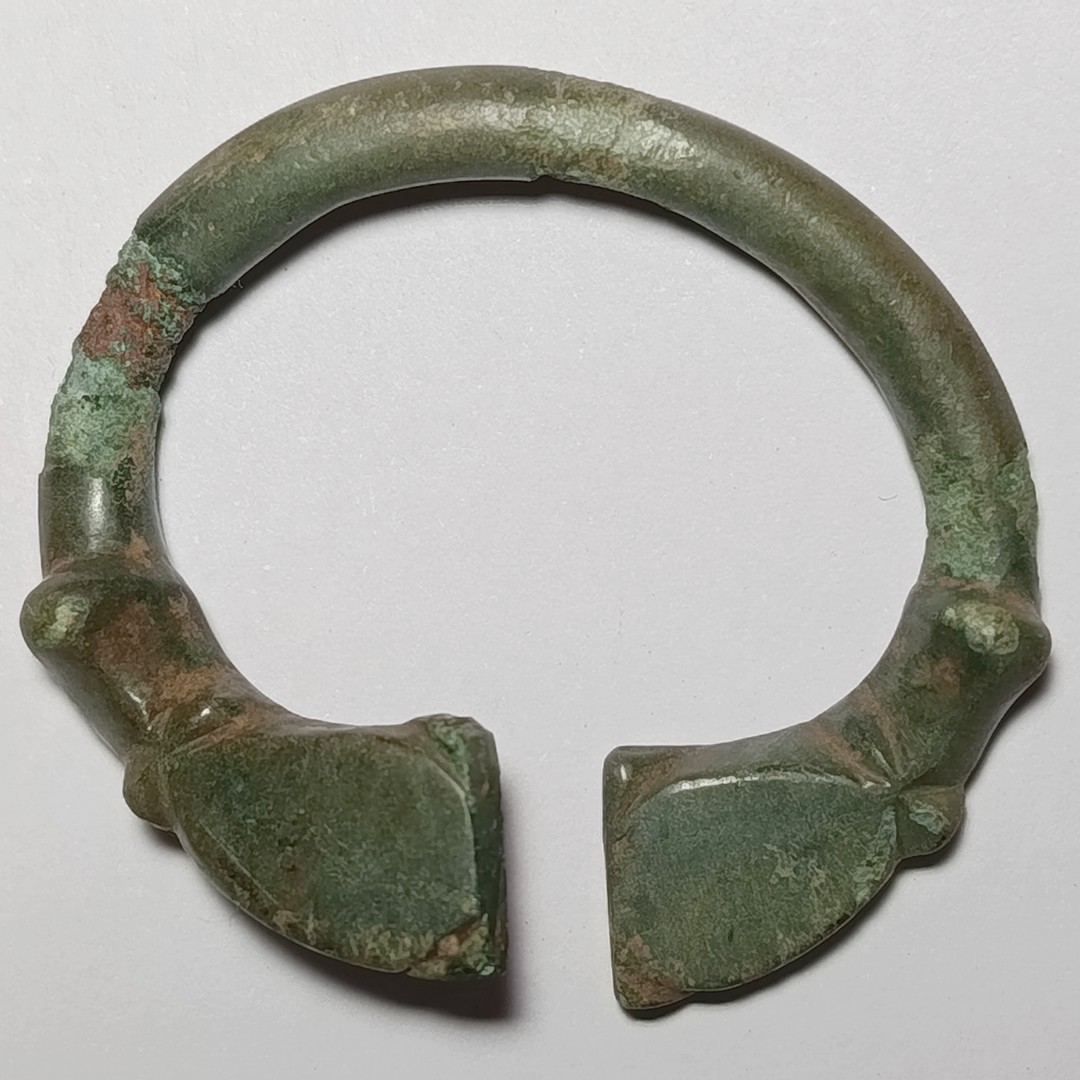
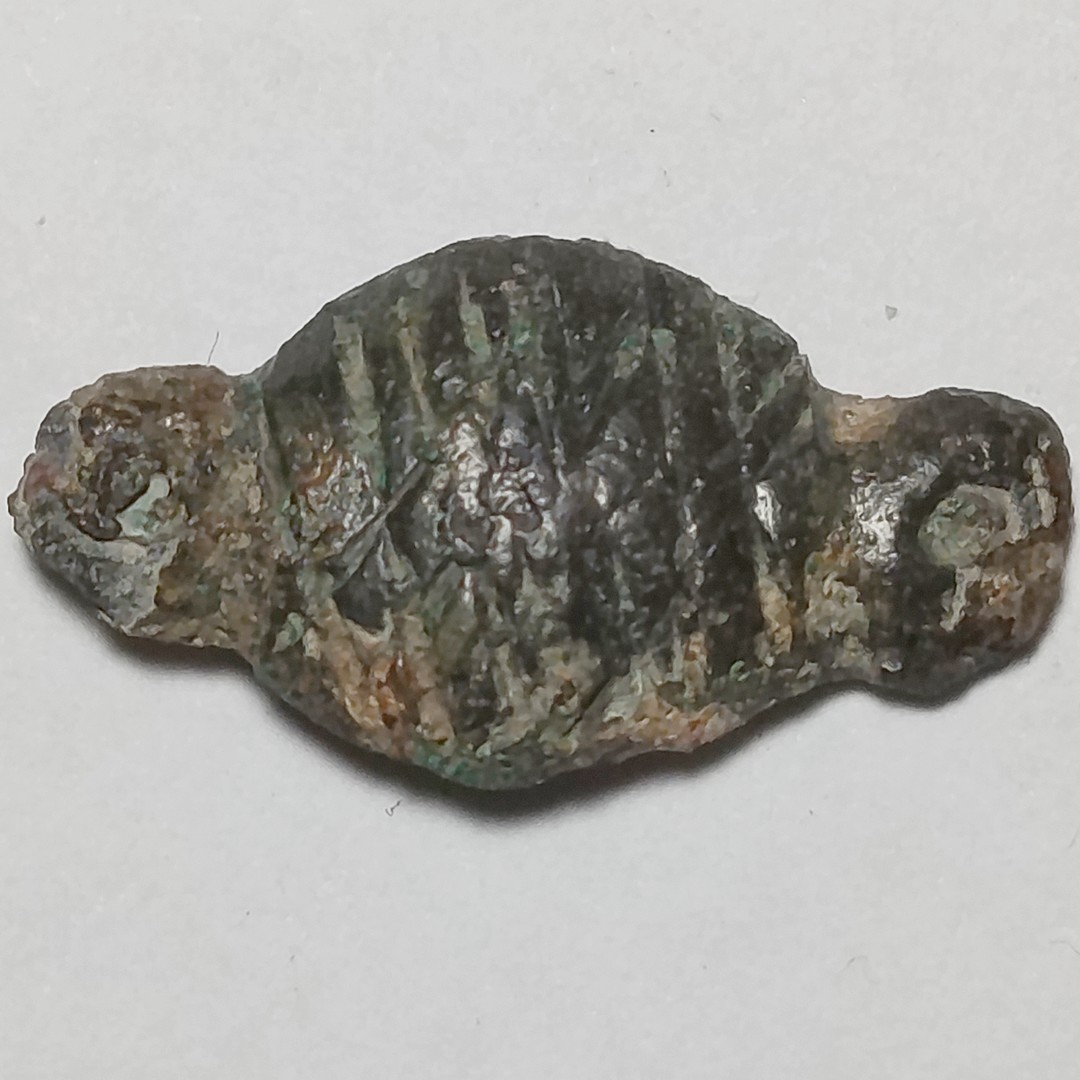
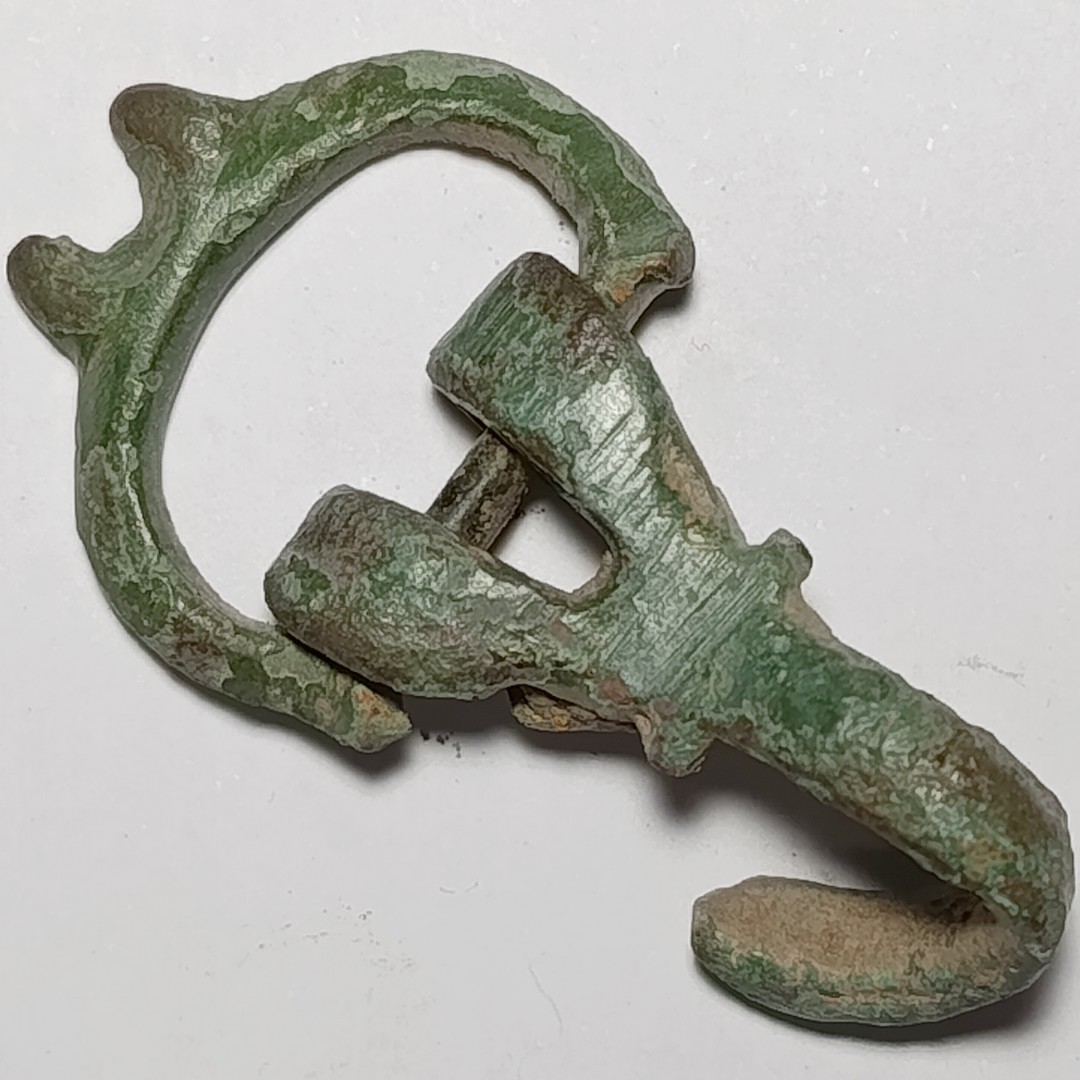
On the right: A penannular brooch cast in copper alloy, dating to the 5th–6th century Celtic period. Weight: 15.12g. Diameter: 40.27mm x 37.6mm.
(read more)
(Pic)
On the middle: Cast copper alloy single-looped oval buckle with integral forked spacers (1350-1450).
(read more)
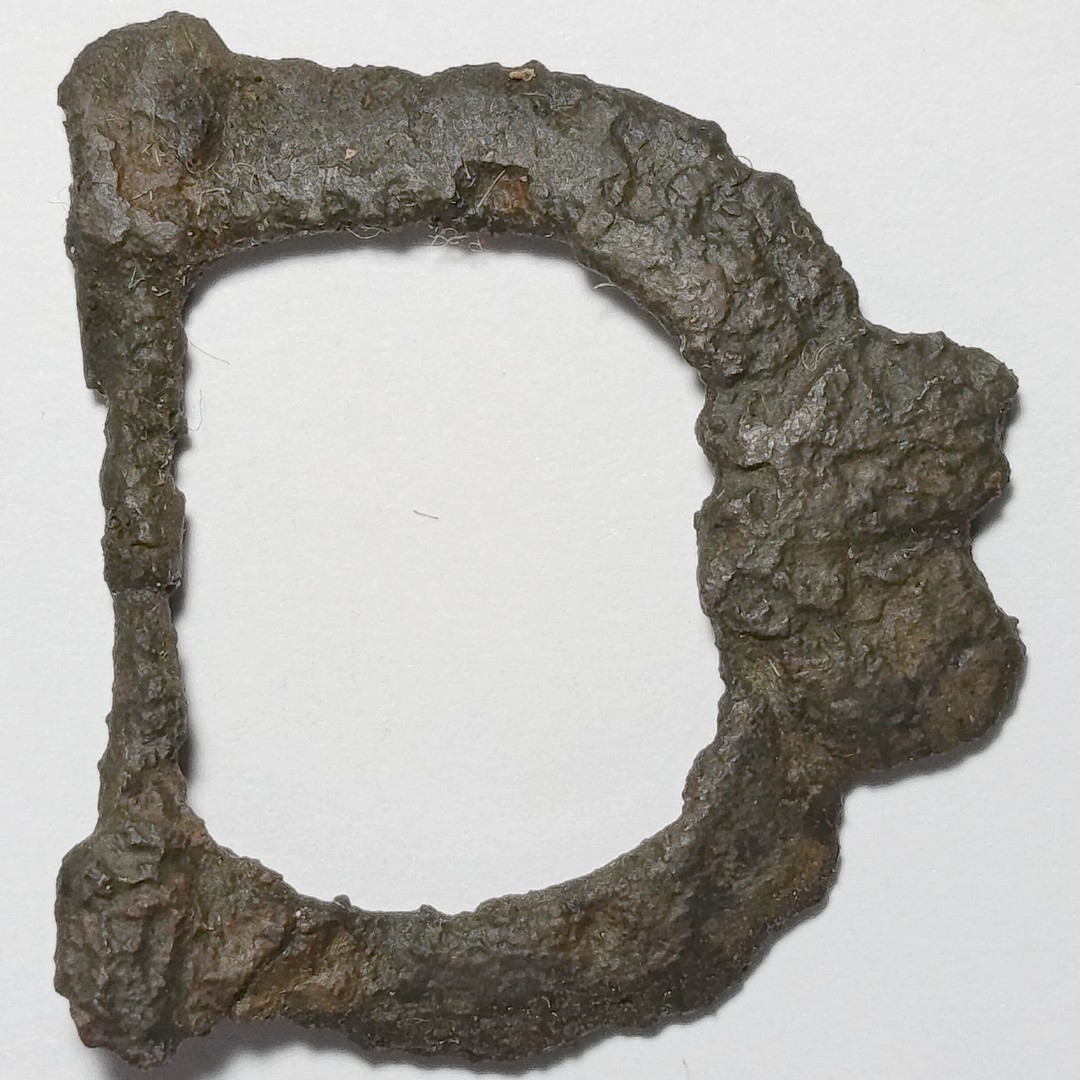
On the right: A Medieval buckle with integral forked spacer (1350-1425). Weight: 5.20g. Diameter: 42.48mm x 22.50mm.
(read more)
On the left: 4 Leaf Clover Pin Badge Irish Shamrock.
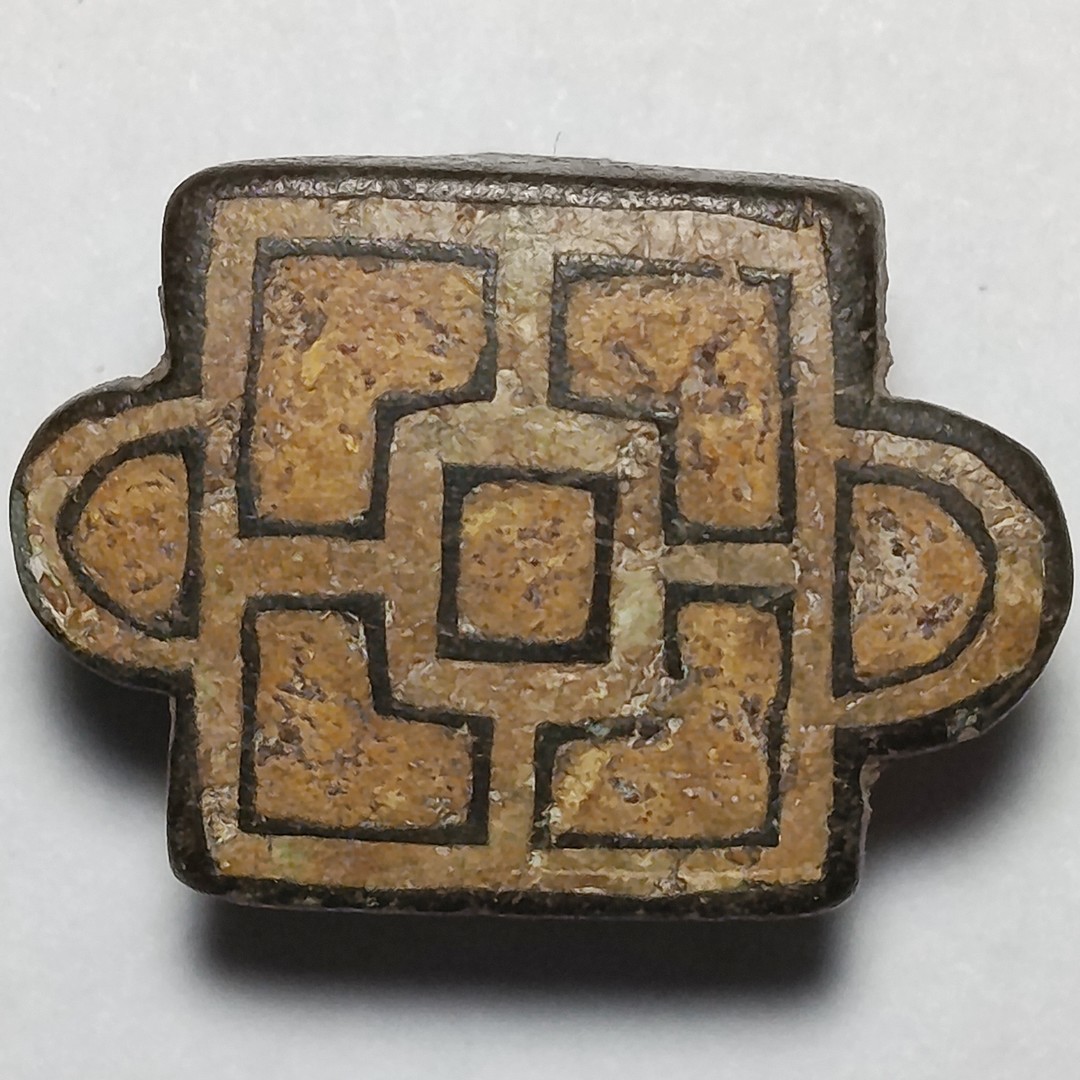
A cast copper-alloy Medieval strap fitting or belt mount c. 1350 - 1400 AD. Weight: 0.77g. Diameter: 16.4mm x 8.61mm.
(read more)
(Pic)
On the right: Hexagonal Cufflink. Weight: 5.71g. Diameter: 22.5mm x 23.5mm.
(Pic)
On the left: Anglo-Saxon Bronze Dress Pin. Circa 6th-8th Century. Weight: 5.51g. Diameter: 67.4mm.
(read more)
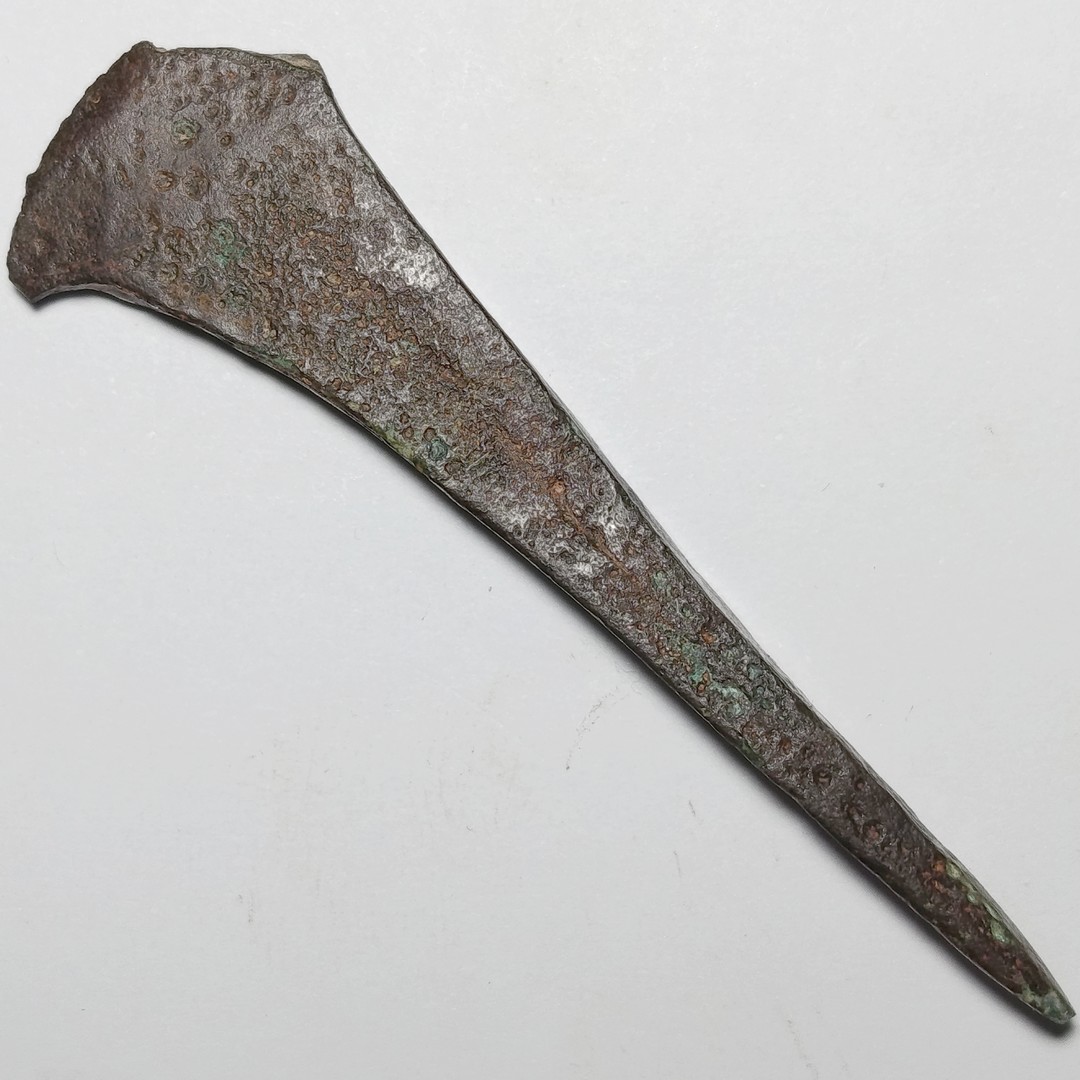
On the right: Bronze Age Votive Flat Axe. Weight: 5.33g. Diameter: 46.8mm x 13.1mm.
(read more)
On the left: An antique watch with a rolled gold bezel, 20 microns thick.
An antique compass.
On the right: Copper alloy Georgian seal matrix, circa 19th-20th century.
On the left: Hallmarks are stamped on the case back of the silver pocket watch.
Military
Vintage Catholic Girls Guide badge - "Bí Ullam" - be prepared.
Irish Engineering & Foundry Union membership badge (1933 - 1956).
Fenian Centenary badge (1850–1950).
Quarter-to-Six Club badge from Butlin’s Camp in Mosney.
(read more)
Royal Irish Fusiliers Regiment RIF Shoulder Title.
(read more)
Catholic Emancipation Centenary badge (1829-1929).
(Pic)
Victorian Sherwood Foresters (Derbyshire Regiment) collar badge, British army, c.1881-1902. As shown by the title "Derbyshire" - this was changed to "Notts & Derby" in 1902. The regiment served during the Boer War.
(read more)
On the right: Army Temperance Association Pendant, 1893 (No. 6 Issue), awarded to British soldiers who pledged abstinence from alcohol as part of the military temperance movement.
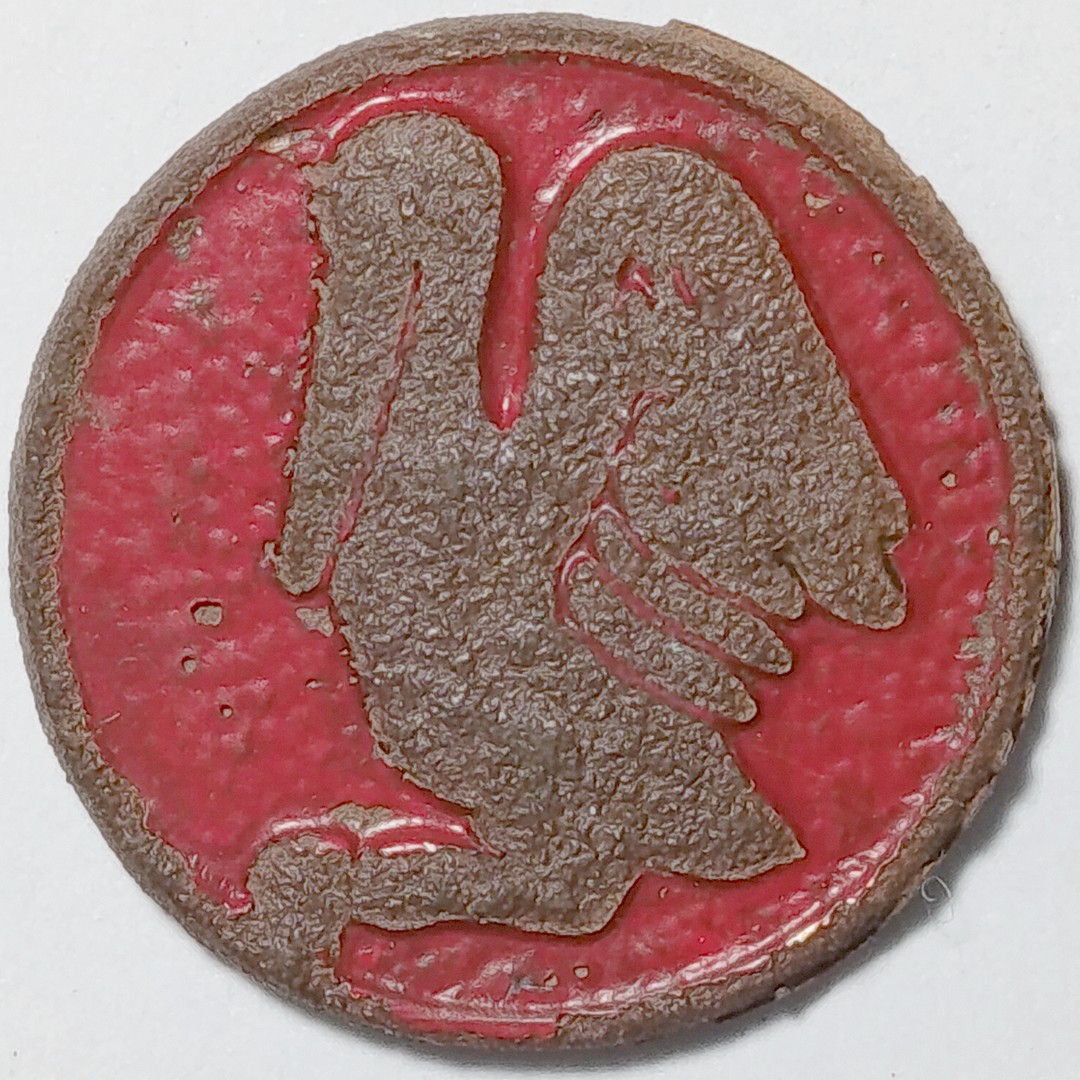
Enamel Cadbury Cococub Club member’s badge from the 1930s, issued as part of a promotional campaign by the British confectionery company Cadbury.
This badge features a pelican feeding its young with its own blood, a traditional symbol of self-sacrifice, charity, and devotion known as "the pelican in her piety".
Three cast copper-alloy double loop trapezoidal buckles (1620-1680).
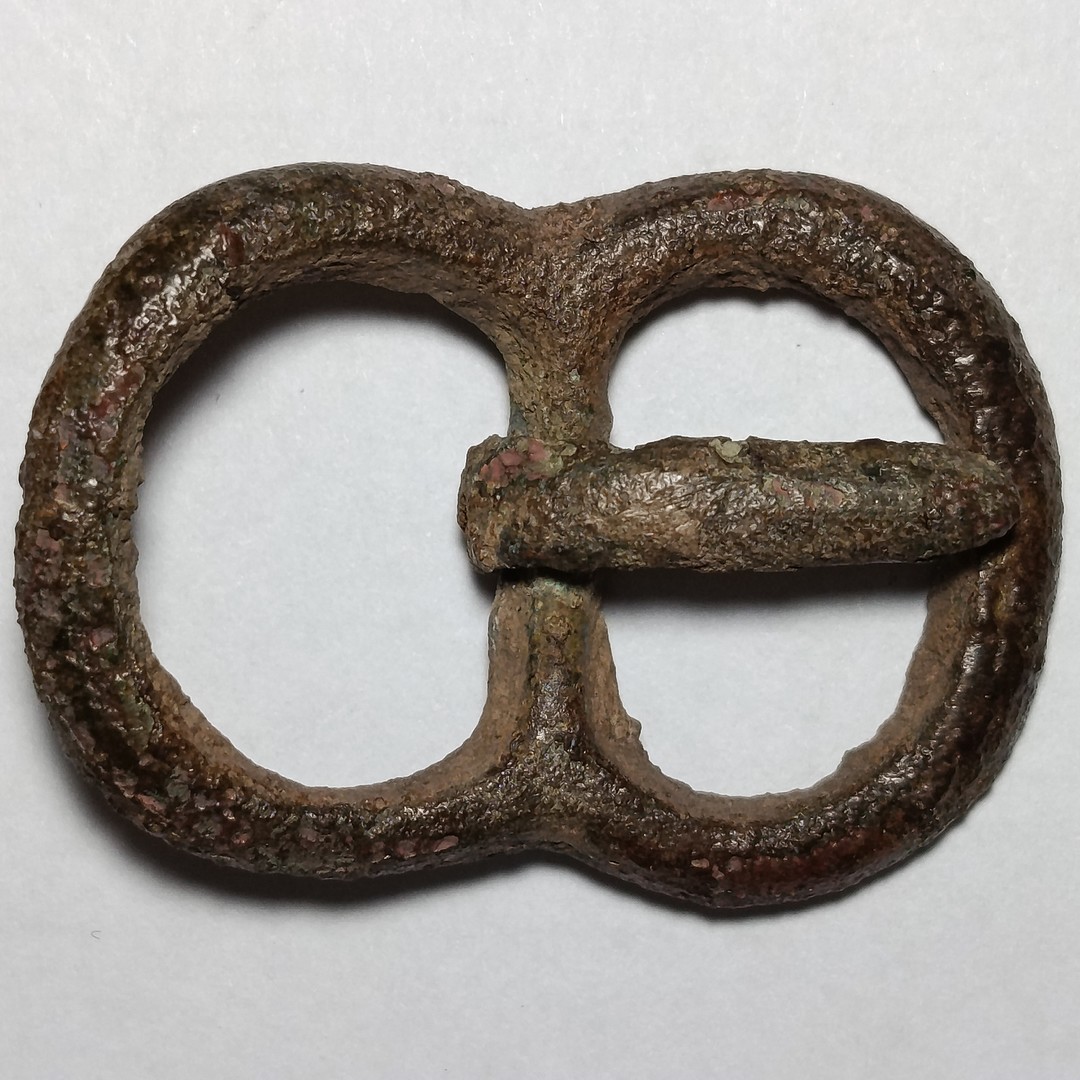
On the right: Cast copper-alloy double loop oval buckle (1500-1650).
On the left: 19th century horseshoe heel plates.
Vintage Belt Buckles.
Vintage Belt Buckles.
On the left: French Au Progrès Saint-Nazaire buckle, early 20th century.
On the left: Vintage saddlers badge.
(D.U.T.C) The Dublin United Tramways Company was the earlier name of the tramway operator in Dublin, while the Dublin United Transport Company was the later name adopted after the organisation expanded its services to include buses. The company operated from 1891, running both tram and bus services in the city. It was dissolved on 1 January 1945, when, under the Transport Act 1944, it was incorporated into the newly established Córas Iompair Éireann (CIÉ), which remains Ireland’s national transport operator today.
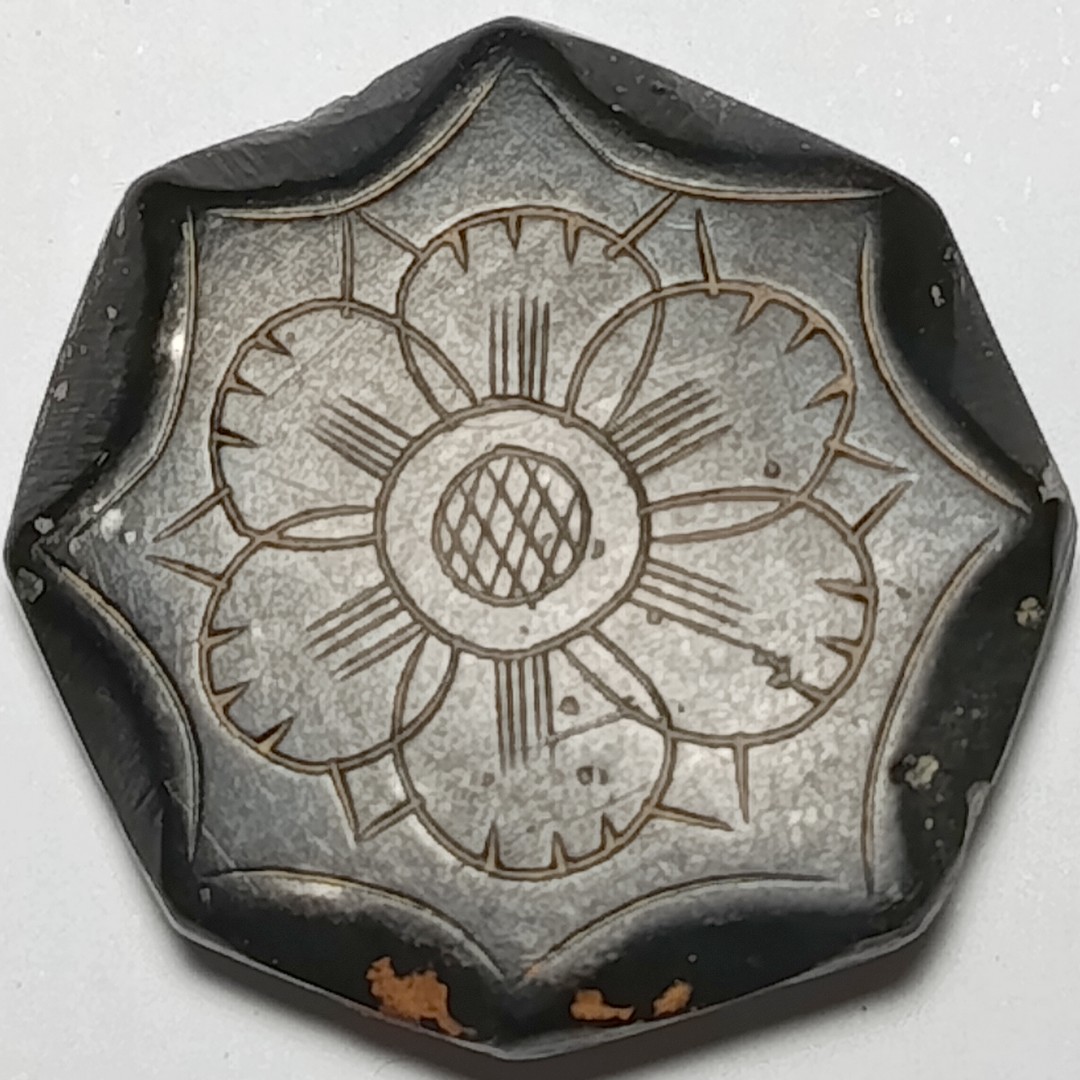
Flower - 19th century harness decoration.
(read more)
Georgian silver thimble.
(read more)
Vintage copper thimble.
Boy Scout Bronze Woggle "Baden Powell House" 1950/60s.
On the right: Crotal bell.
(read more)
Two old English whistles.
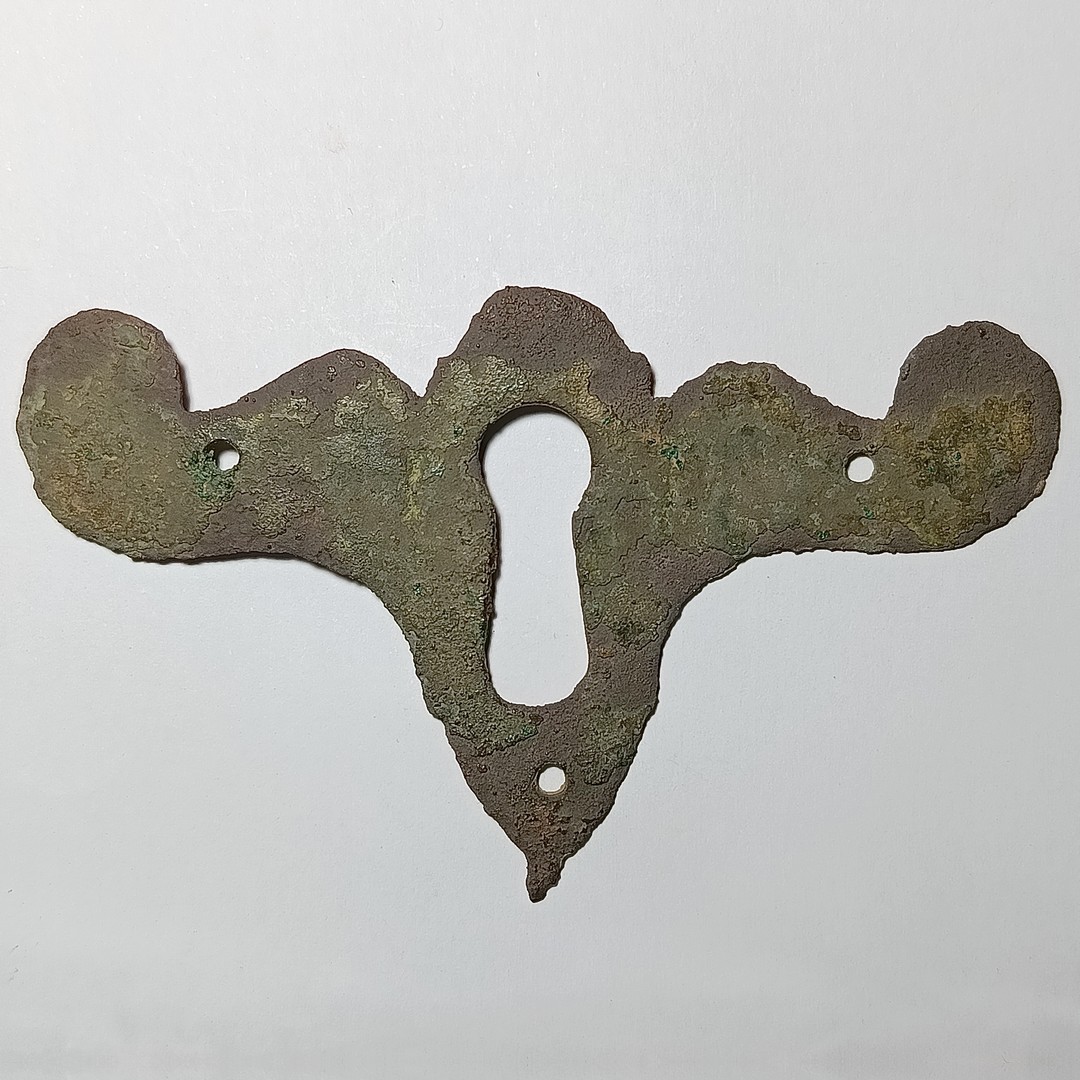
Lock cover plate.
(read more)
A padlock inspired by the design of Roman padlock.
(read more)
A padlock most likely dating to the early 19th century. A similar example can be seen here.
(Pic)
Victorian key hole surround.
An ornate antique Victorian drawer pull dating from the late 19th century.
A watch winder marked with the address associated with watchmaker Patrick Donegan.
(PDF)
On the right: A watch winder.
(read more)
A bronze weights was used to weigh trade goods like flour, sugar, meat.
(read more)
On the right: Vintage 1 oz brass shop weight by Crane of Wolverhampton, circa 1900s.
Eley Bro 12 refers to Eley Brothers, a British ammunition company founded in London in 1828, and a 12-gauge shotgun cartridge.
Gastight Eley London 20 is a vintage 20-gauge shotgun cartridge by Eley Brothers, designed with a sealed case for moisture protection and reliable firing.
.243 Winchester cartridge commonly used for hunting deer and varmints.
12‑gauge shotgun cartridge headstamp, branded by Dublin gunmaker W. Kavanagh & Son and manufactured by Kynoch in Britain. - Such shells were common in the 1890s–1930s.
On the right: An ornamental belt mount or clasp from the late Victorian or Edwardian period, likely attached to leather clothing or a work bag.
Brass lion paw, antique cabinet hardware.
On the right: Copper alloy post-medieval candle snuffer (1670-1690).
(read more)
On the left: Vintage bronze snap shackle fixed bail.
Vintage brass cannon miniature.
On the left: Victorian Brass Door Knob Petal Shape.
(read more)
Door Knob.
On the left: Harness ring often misidentified as Celtic ring money.
(read more)
Victorian printing font used in old newspapers.
Tea Caddy spoon.
18th century brass calendar medal by John Powell, with moonphase calendar to reverse.
(Pic)
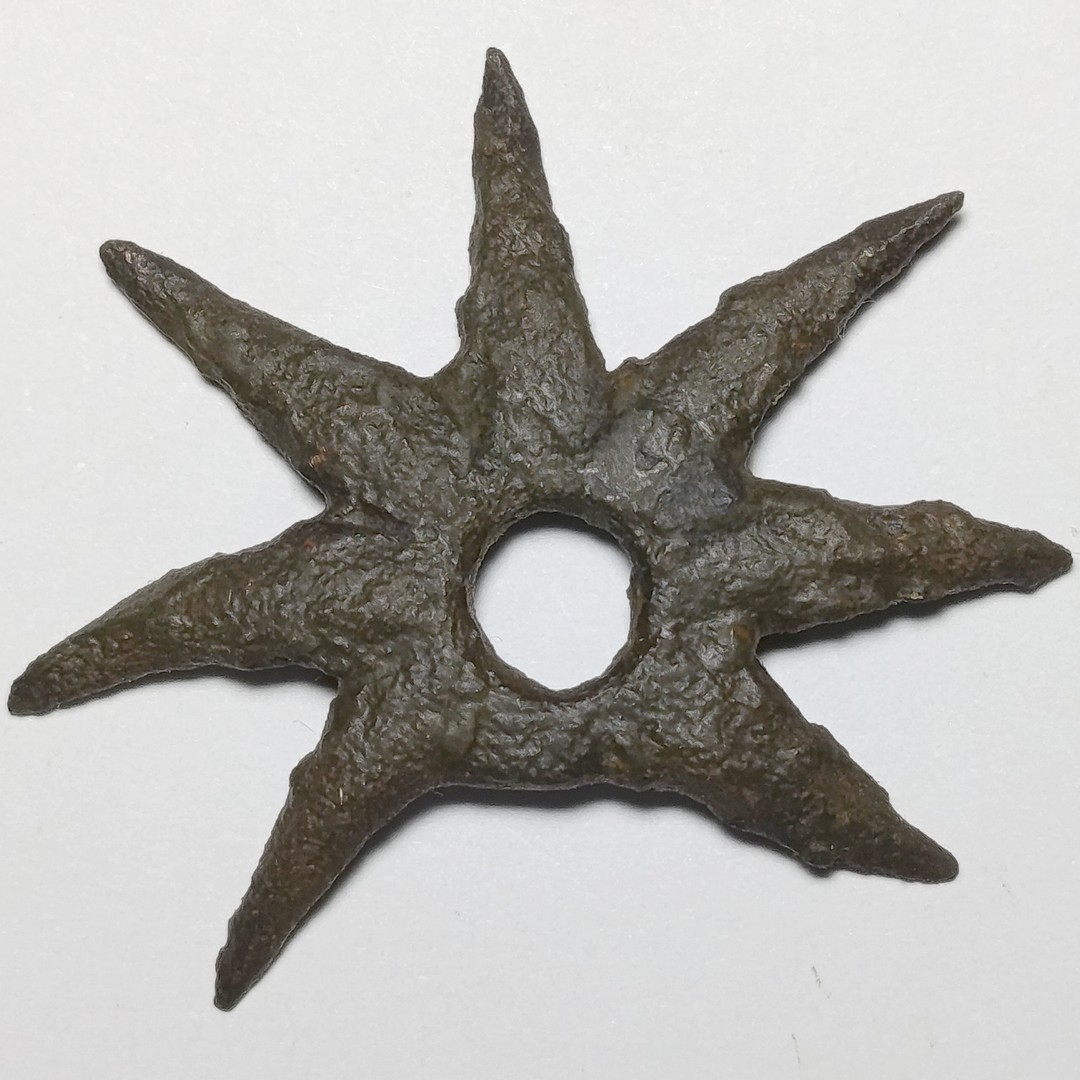
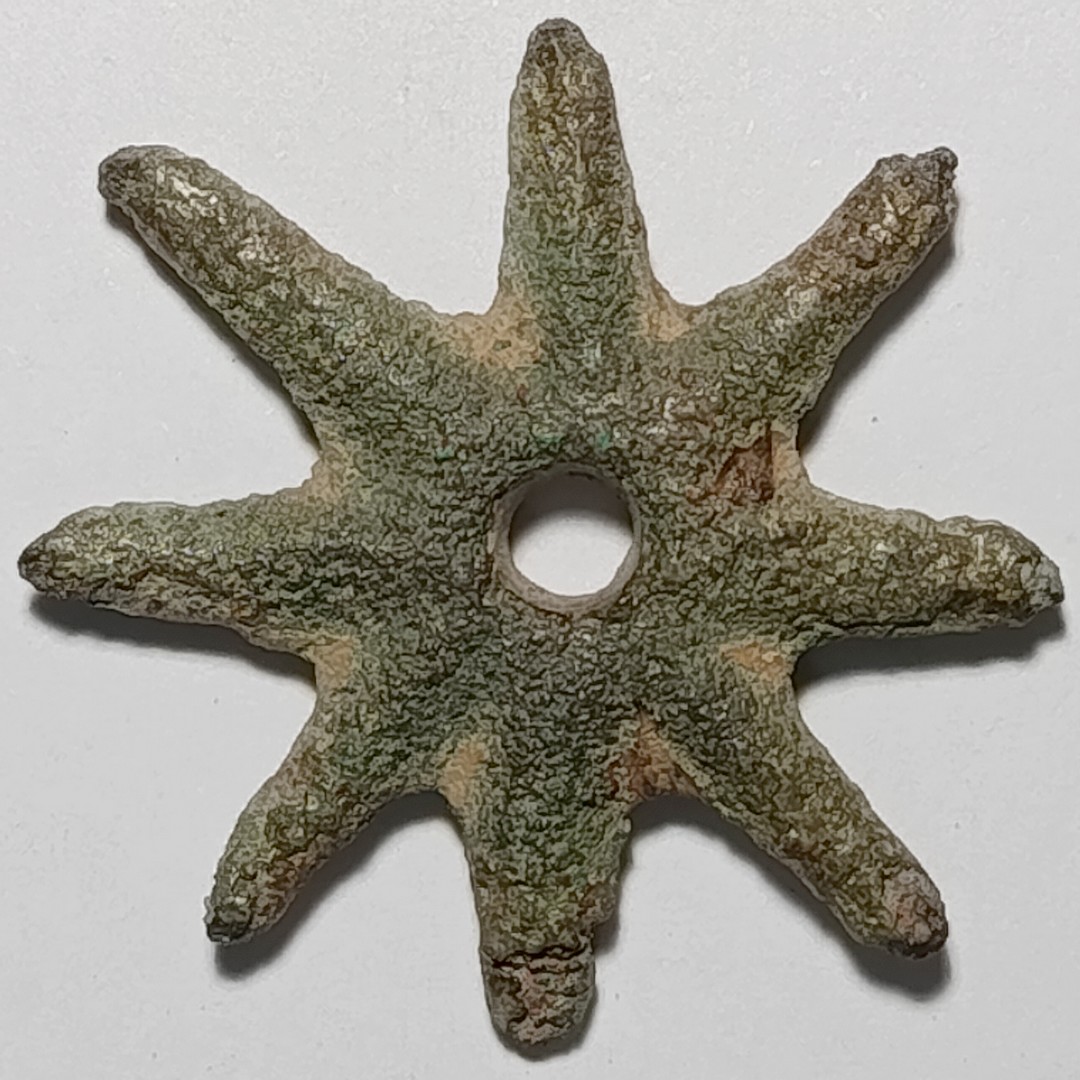
On the right: A copper-alloy star rowel from a rowel spur of Medieval to Post-Medieval date. Weight: 4.10g. Diameter: 29.53mm.
(read more)
Lead
Two handles from antique lead spoons or forks.
Lead Alloy Dress - Hem Weight.
(read more)
Lead toy horse, popular in Victorian England, was a hand painted miniature.
Lead saddlers badge.
Lead cloth seal.
(read more)
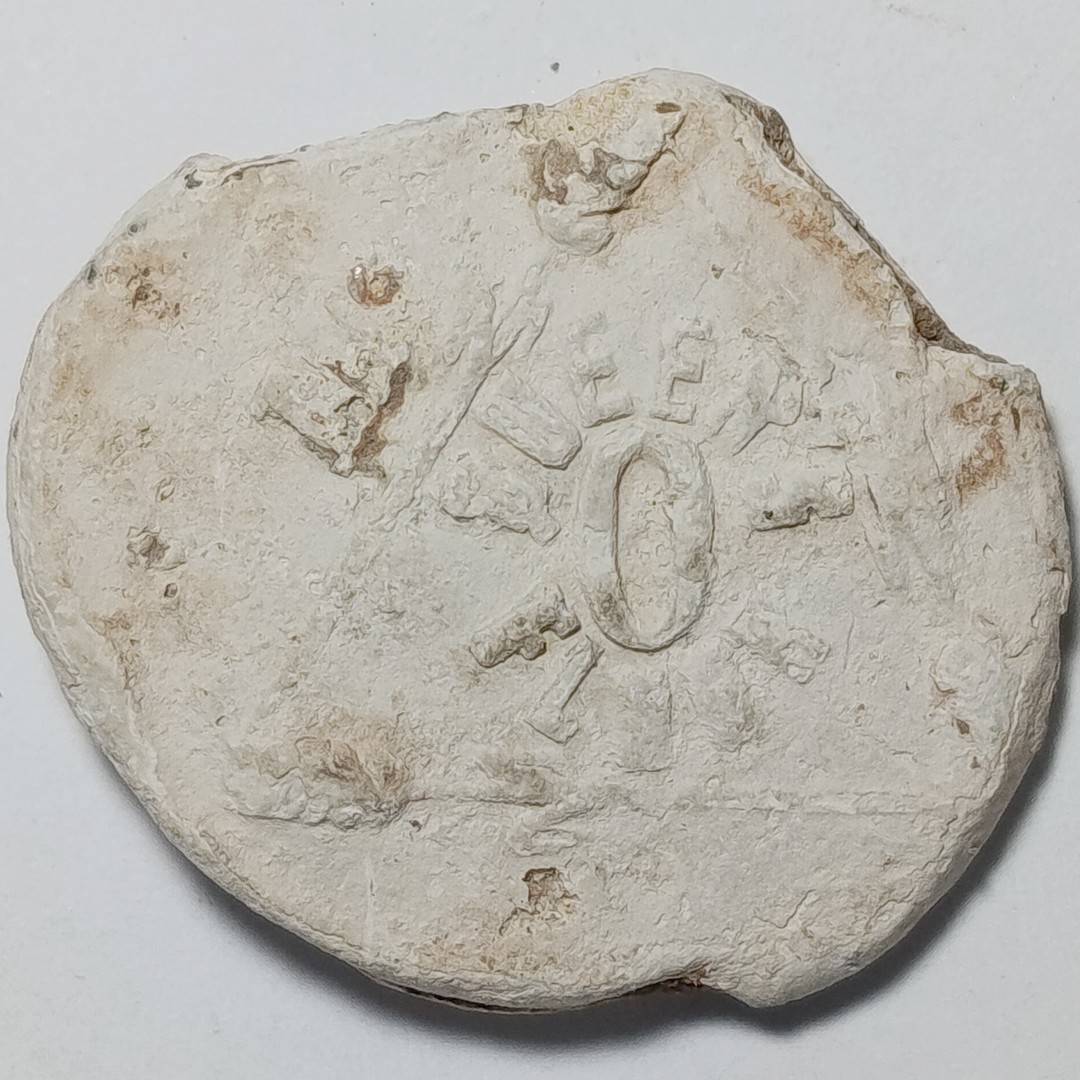
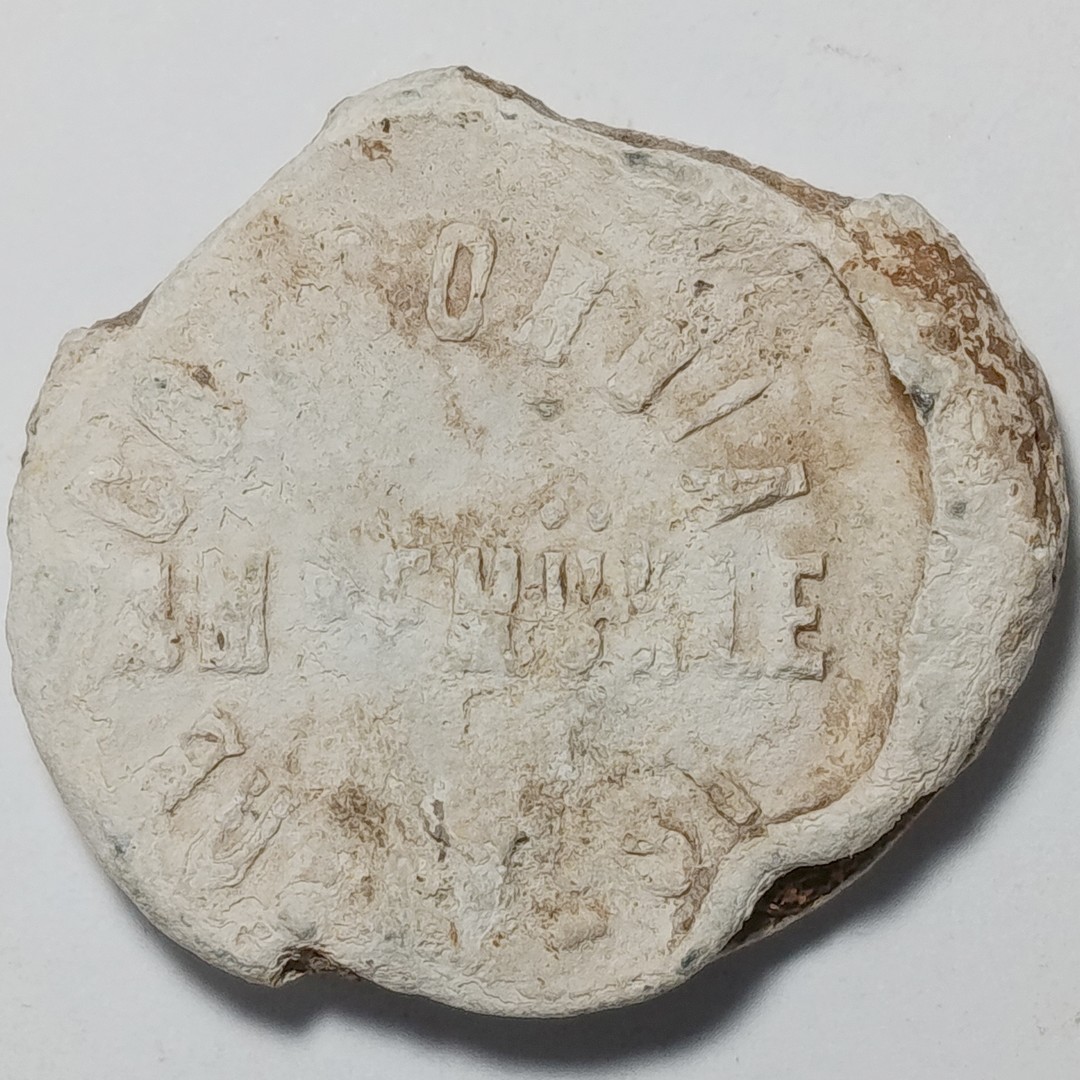
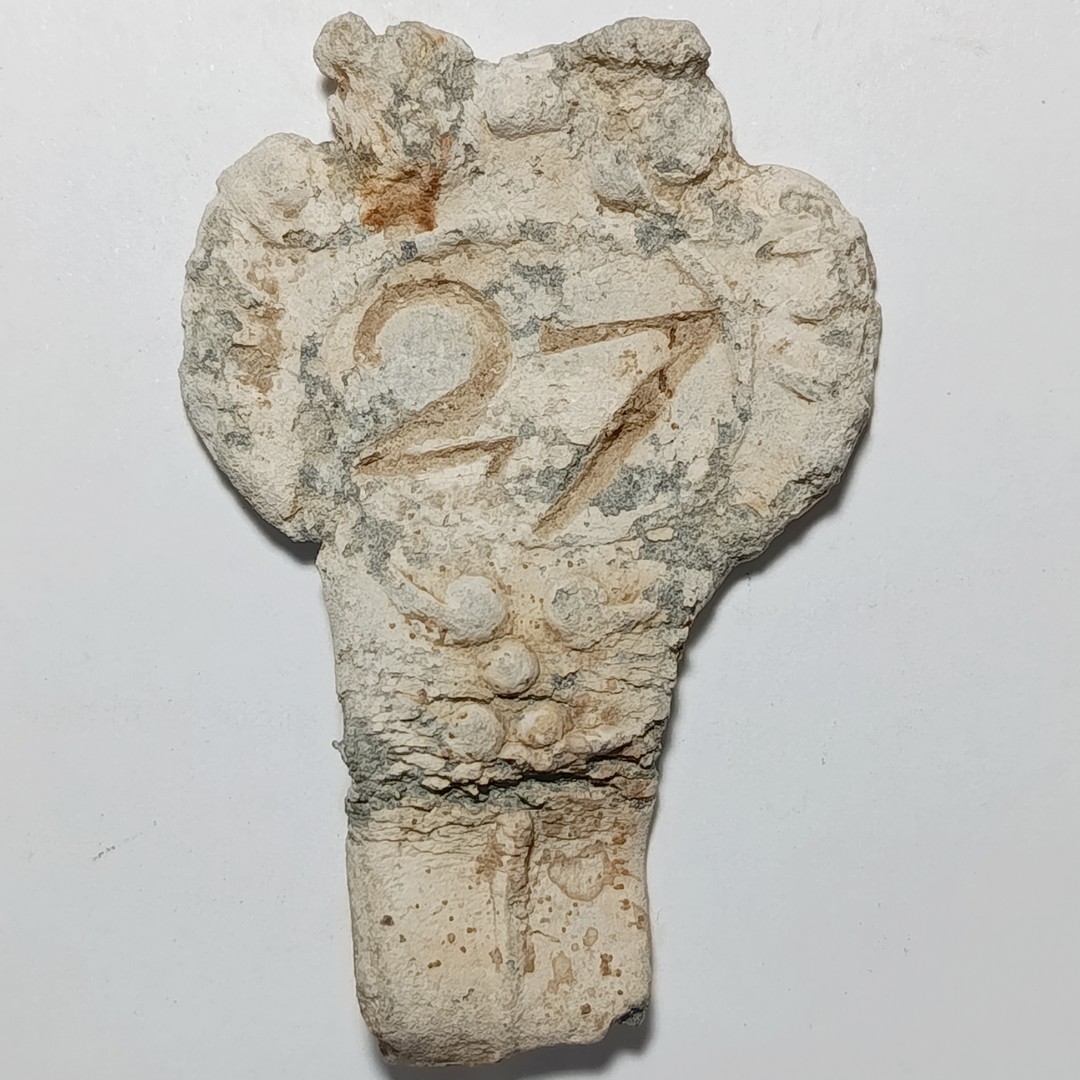
Lead bale seals.
(read more)
Lead bale seals.
(read more)
Lead bale seals.
(read more)
18th century English musket ball, 31g, 18mm.
(read more)
Post medieval bullets.
(read more)
On the left: Roman lead sling shot, 606g, 56 x 44 mm.
Lead spindle whorls.
(read more)
A lead alloy pyramid-shaped weight, 75.70g. This is most likely a fishing weight.
(read more)
A small lead figurine depicting Saint Anthony holding the Christ Child, dated to the 18th–19th century, weighing 10.2 g and measuring 28 mm in height. Saint Anthony of Padua was a Portuguese Franciscan, born in Lisbon in 1195. He became famous as a gifted preacher and a compassionate defender of the poor. Although he is best known as the patron saint of lost items, his patronage is much wider. He is also regarded as a protector of travelers, the poor, sailors, fishermen, the sick, the oppressed, and those seeking a spouse, among many others.
Vintage harmonica reed.